BLAST SWEEPER
Project Details
Development Time | June 2026 - August 2026

- Team Size:
- Solo
- Genre:
- Action Puzzle | Arcade | Casual
- Engine:
- Unity 6.3
- Platform:
- Mobile
- Role:
- Solo Game Designer, Developer, Self-Publisher
Description
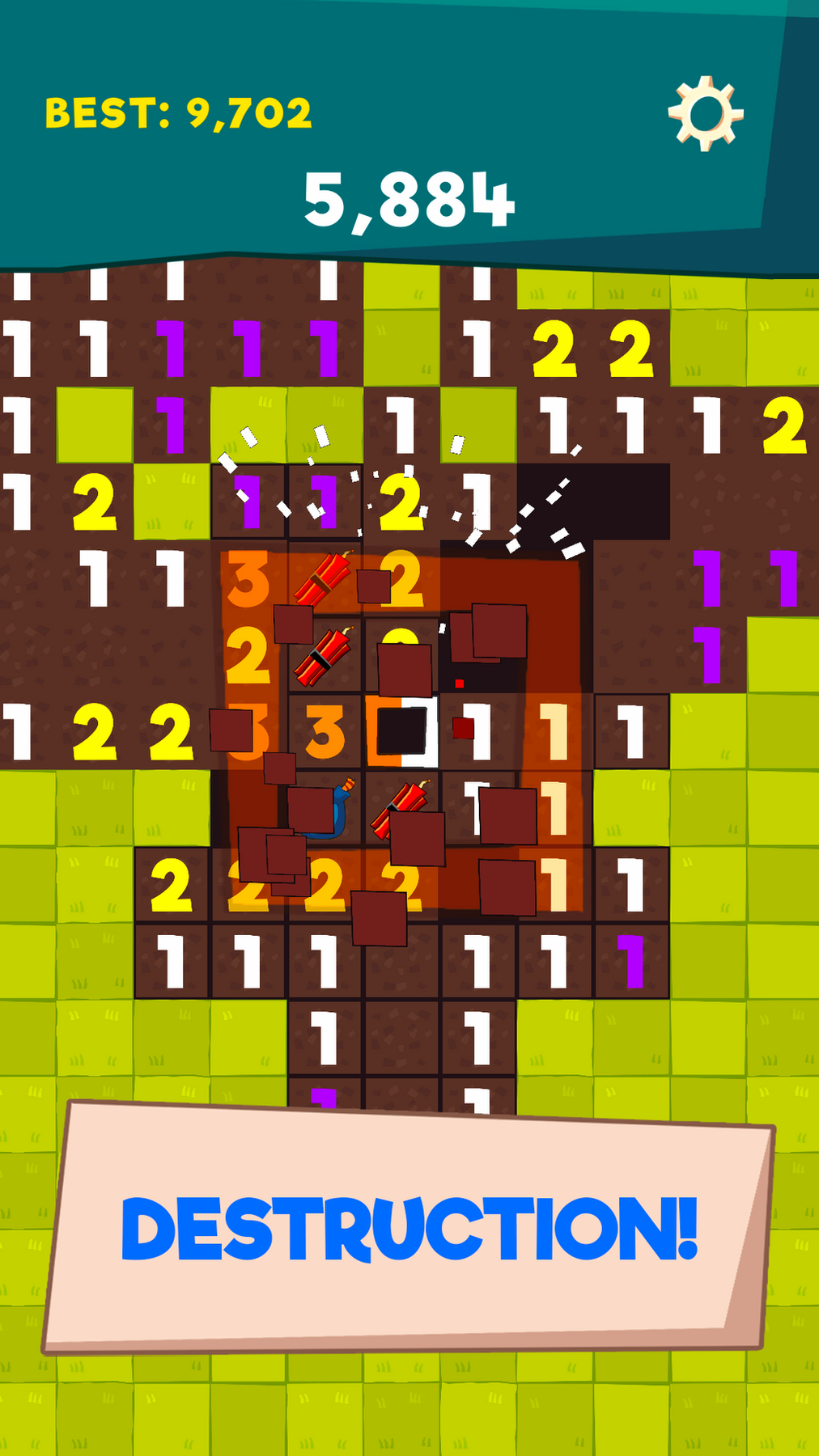
Blast Sweeper is a high-octane mobile game inspired from Minesweeper that trades the classic instant-death penalty for pure, dopamine-fueled destruction. Players navigate a volatile grid where uncovering a mine doesn't end the run, but instead triggers spectacular, chain-reaction explosions to build amplifying combo streaks. The game centers on a relentless, exhilarating feedback loop: embrace the chaos, surf the shockwaves, and turn every potential failure into a massive, screen-clearing thrill ride.
Core Gameplay Mechanics
The Core Loop: Reveal, Merge, Blast
-
Reveal (The Deduction Phase):
- Drawing inspiration from classic logic puzzles, players spend moves to flip hidden tiles. Safe tiles reveal numerical clues indicating how many bombs are hidden in adjacent spaces, forcing players to think critically before spending their moves.
-
Push & Merge (The Spatial Puzzle):
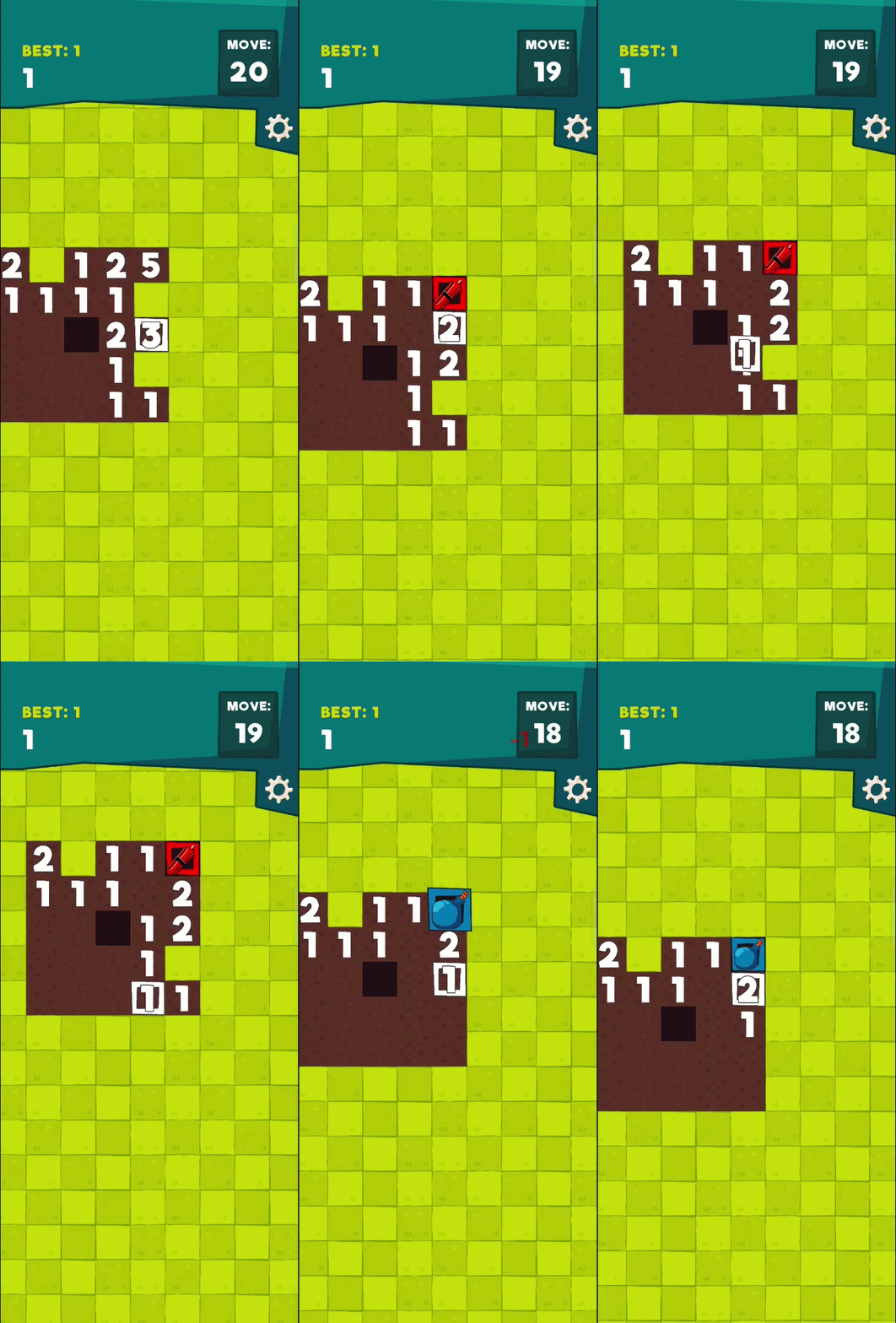
- Instead of simply picking up bombs, players must actively push revealed Level 1 bombs across the grid. Colliding two bombs of the same tier merges them into a stronger explosive (e.g., Level 1 + Level 1 = Level 2). This turns the grid into a spatial awareness puzzle where positioning is everything.
-
Blast (The Payoff):
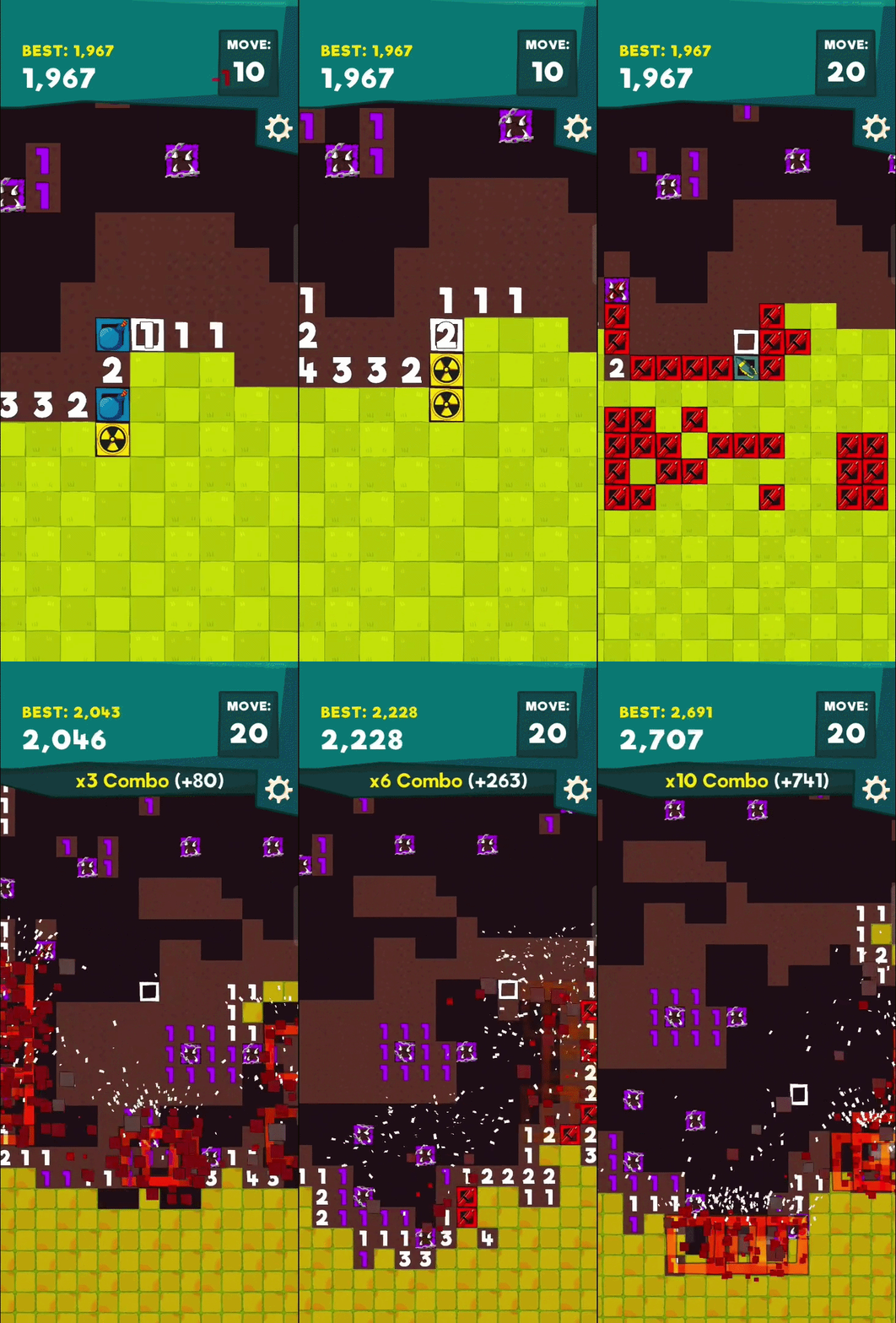
- Detonating high-level bombs triggers massive, screen-clearing chain reactions. Because the player had to manually deduce, position, and merge the bombs, the resulting dopamine hit of the blast feels highly earned.
The Move Economy (Risk vs. Reward)
The game operates on a tight, move-based economy where every action is a calculated risk against the player's remaining moves.
-
The Costs:
- Revealing a hidden tile: -1 Move
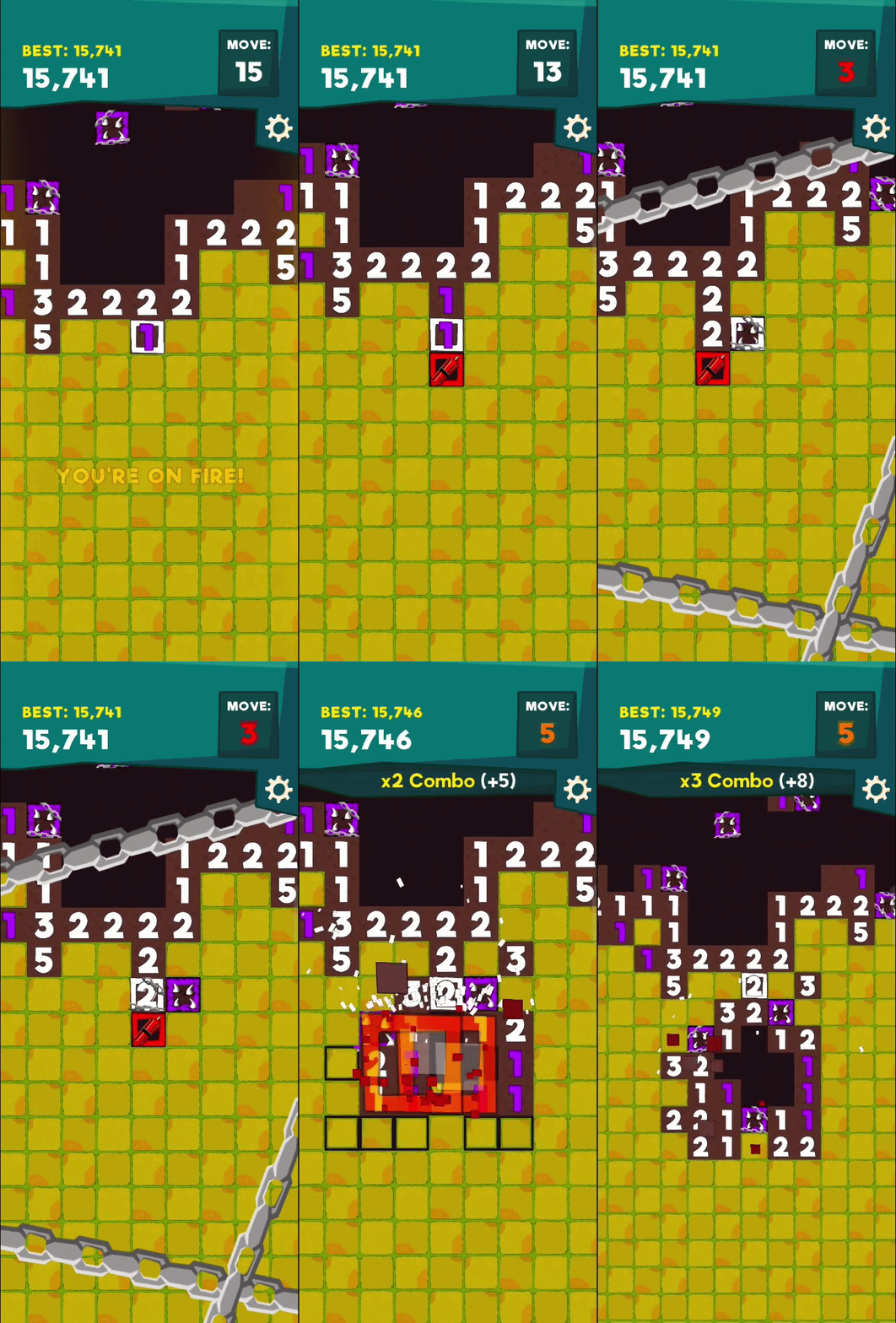
- Stepping on a Spike hazard: -10 Moves (A severe punishment that demands careful grid navigation).
-
The Payouts (Blast Rewards): To survive, players must efficiently merge bombs to maximize their return on investment.
- Level 1 Blast: +2 Moves
- Level 2 Blast: +4 Moves
- Level 3 Blast: +8 Moves
- Level 4 Blast: +16 Moves
- The Combo System: To push the skill ceiling higher, triggering consecutive blasts creates a combo streak that rewards additional bonus moves. This system actively incentivizes players to take risks and set up elaborate, multi-bomb chain reactions rather than playing it safe with early detonations.
Target Experience
The player should feel like a master orchestrator of chaos. The core emotion transitions from the focused, quiet satisfaction of logical deduction into a sudden, massive rush of dopamine as they trigger spectacular chain reactions. Instead of fearing a mistake, the player is eagerly hunting for opportunities to build the ultimate blast, constantly chasing the thrill of beating their personal best.
Design Pillars
-
Dopamine Blasting (Visceral Payoff): The game must deliver a highly satisfying, accelerating feeling of chaos through chain reactions. The visual and mechanical payoff of a blast must always feel proportionate to the effort it took to set it up.
-
Spatial Puzzle Mastery: Movement cannot be mindless. By forcing players to deduce safe tiles and physically push and merge bombs across a grid, the game demands spatial awareness. The board acts as a dynamic puzzle that the player must actively organize.
- High-Stakes Move Economy (Earned Survival): Every action must carry weight. Instead of a passive timer, a strict move-based economy turns every reveal, push, and hazard into a calculated risk. Surviving and progressing relies entirely on the player’s ability to maximize their move-returns through high-tier merges and combo streaks.

The Iteration Journey
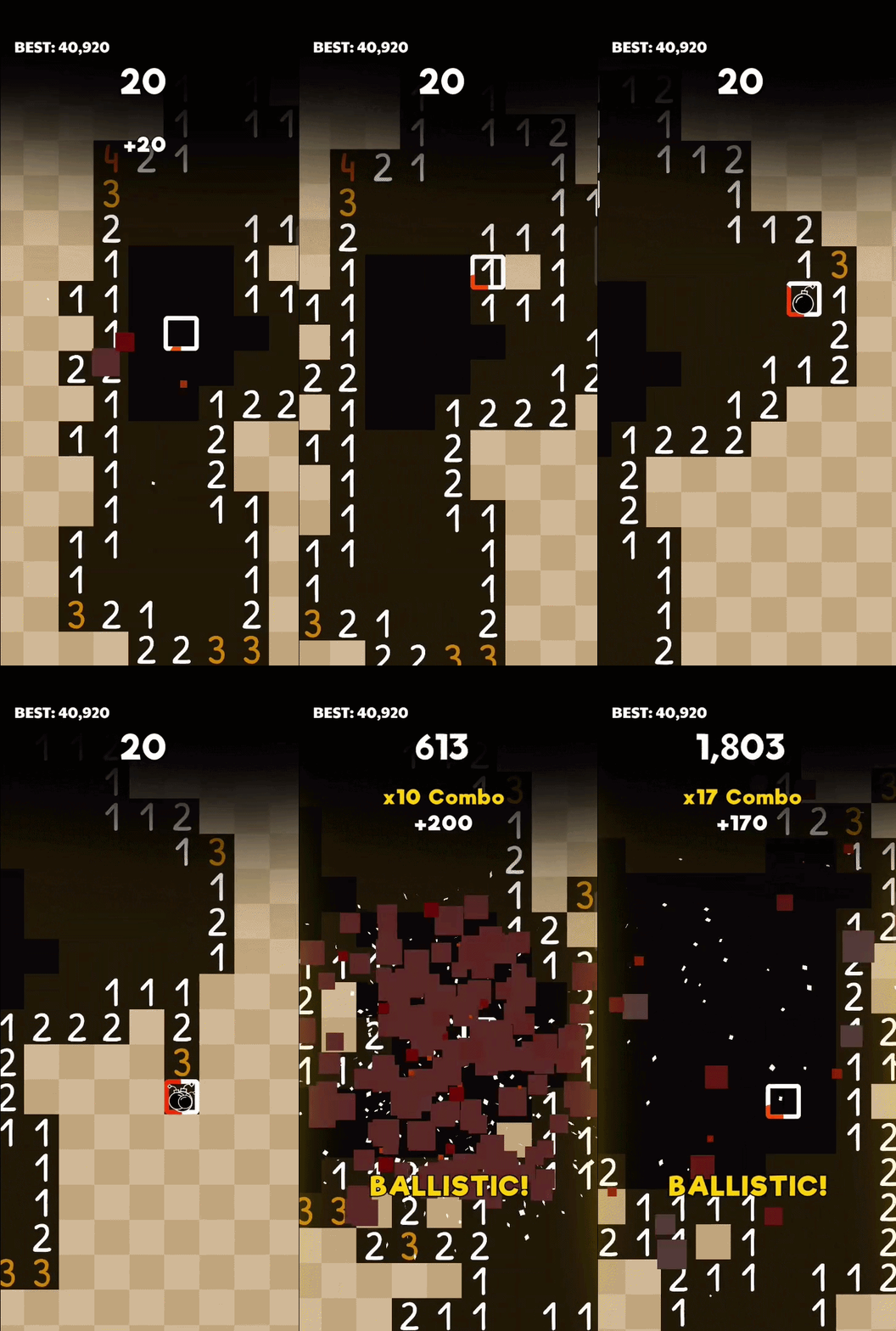
Iteration 1: Proving the Fun
-
The Goal:
Build a proof of concept to see if the core action, blasting was inherently fun.
-
The System:
Carry and upgrade bombs up to Level 3; radial timer on the cursor.
-
The Result:
It worked. The dopamine hit of the blast was validated.
-
The Problem:
The game lacked clarity, design depth, and a meaningful sense of player progression.
Iteration 2 & 3: The "Punishment" Trap
-
The Hypothesis:
Adding "curses" (rock blockers, instant-death voids, pushbacks) [iteration 2] or environmental hazards (mud traps) [iteration 3] would create deep, emergent gameplay and risk/reward calculations.
-
The Playtest Reality:
Players felt penalized for engaging with the core mechanic. The feedback was brutal but clarifying: "Blasting feels like punishment now!"
-
The Lesson:
'Complexity does not equal depth.' Tying heavy move-costs and ambiguous rules to the core fun loop actively discourages players from doing the thing that makes the game enjoyable.
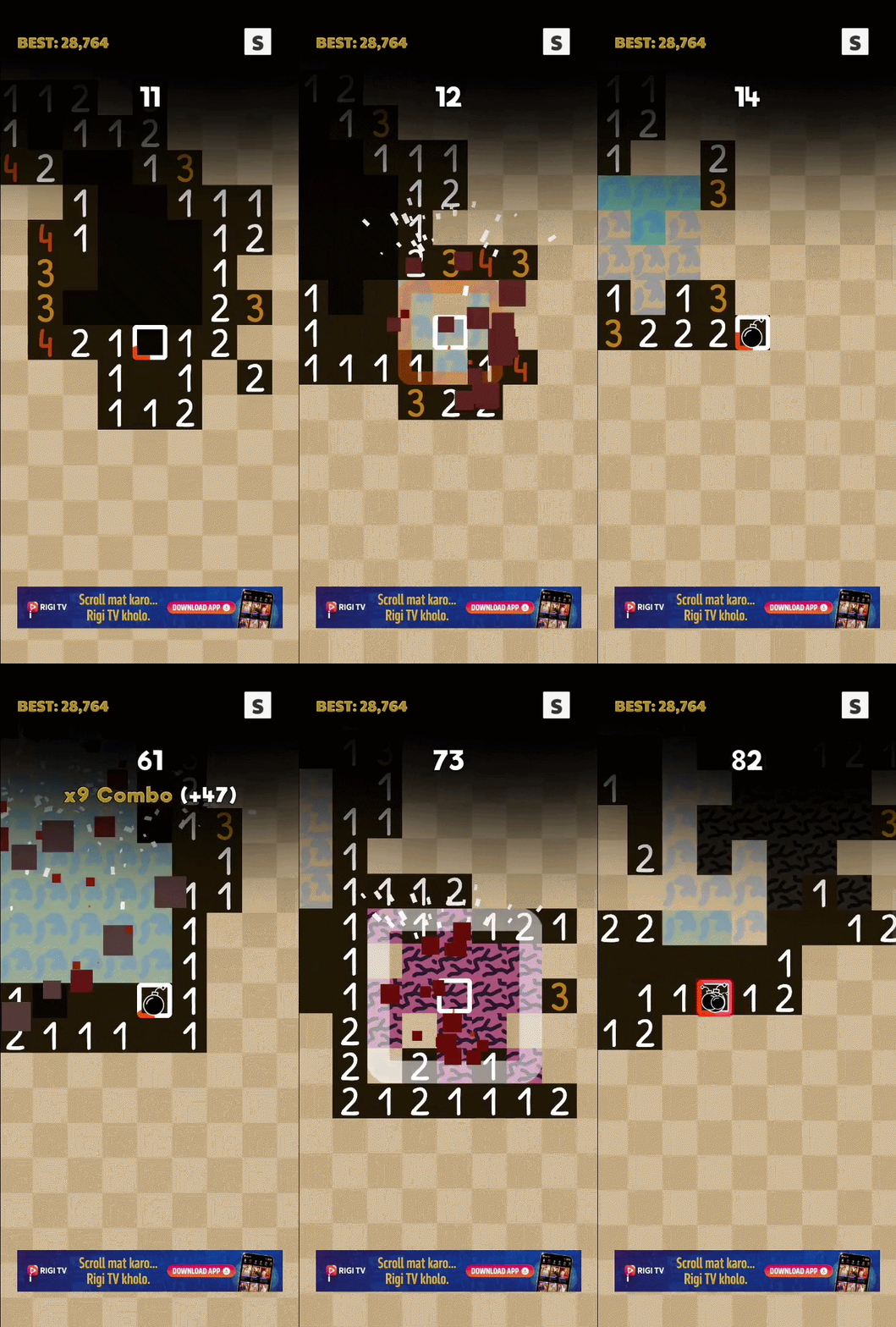
(rock blockers, instant-death voids, pushbacks)
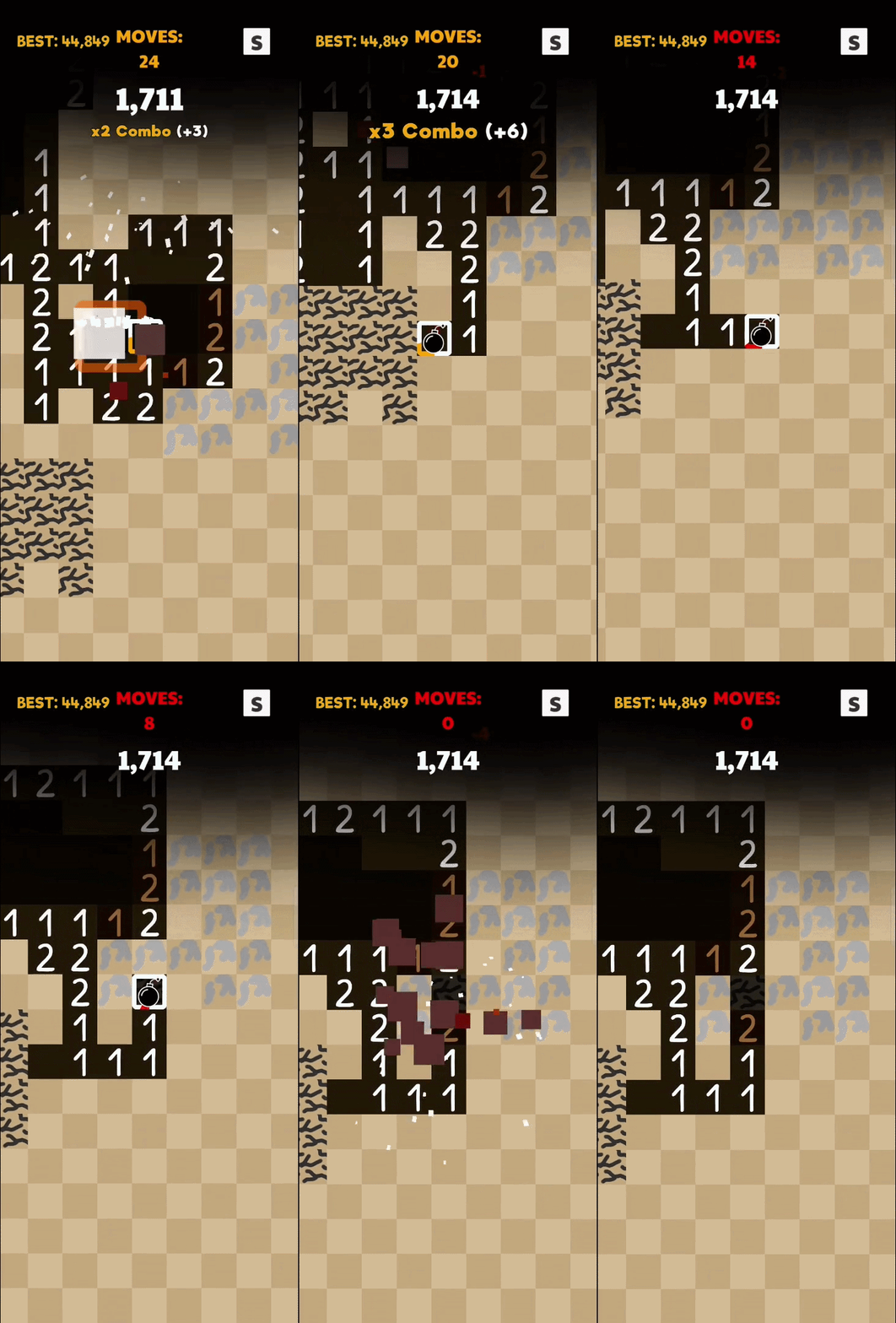
(mud traps)
Iteration 4: The Communication Breakdown
-
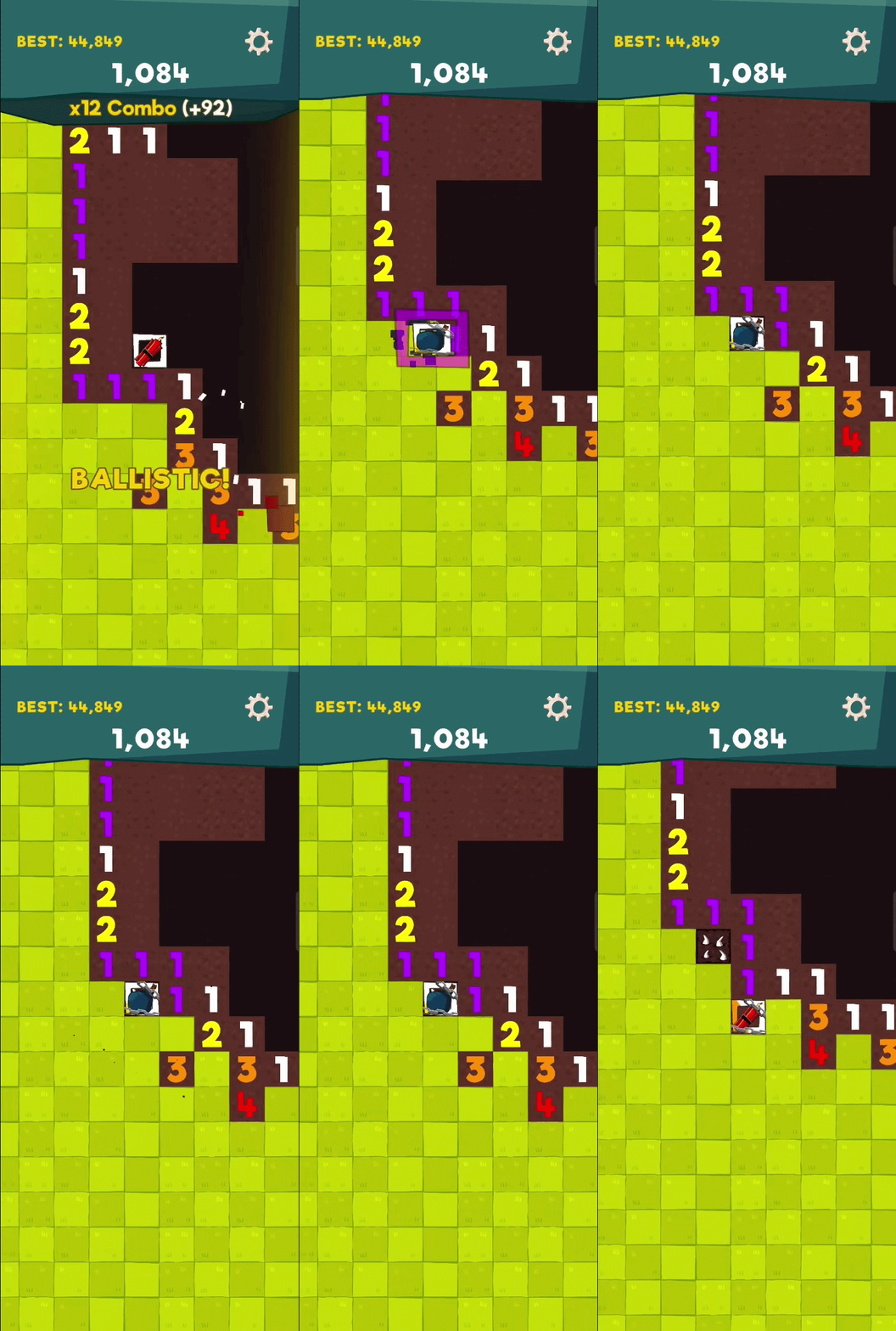
The Fix:
Simplified the design back to a radial timer and focused on visual communication and simple hazards (spike tiles that jam bombs).
-
The Playtest Reality:
A complete failure of game communication. Players didn't understand the radial bar, the spike tiles felt non-threatening, and the tactile satisfaction of upgrading a bomb was lost.
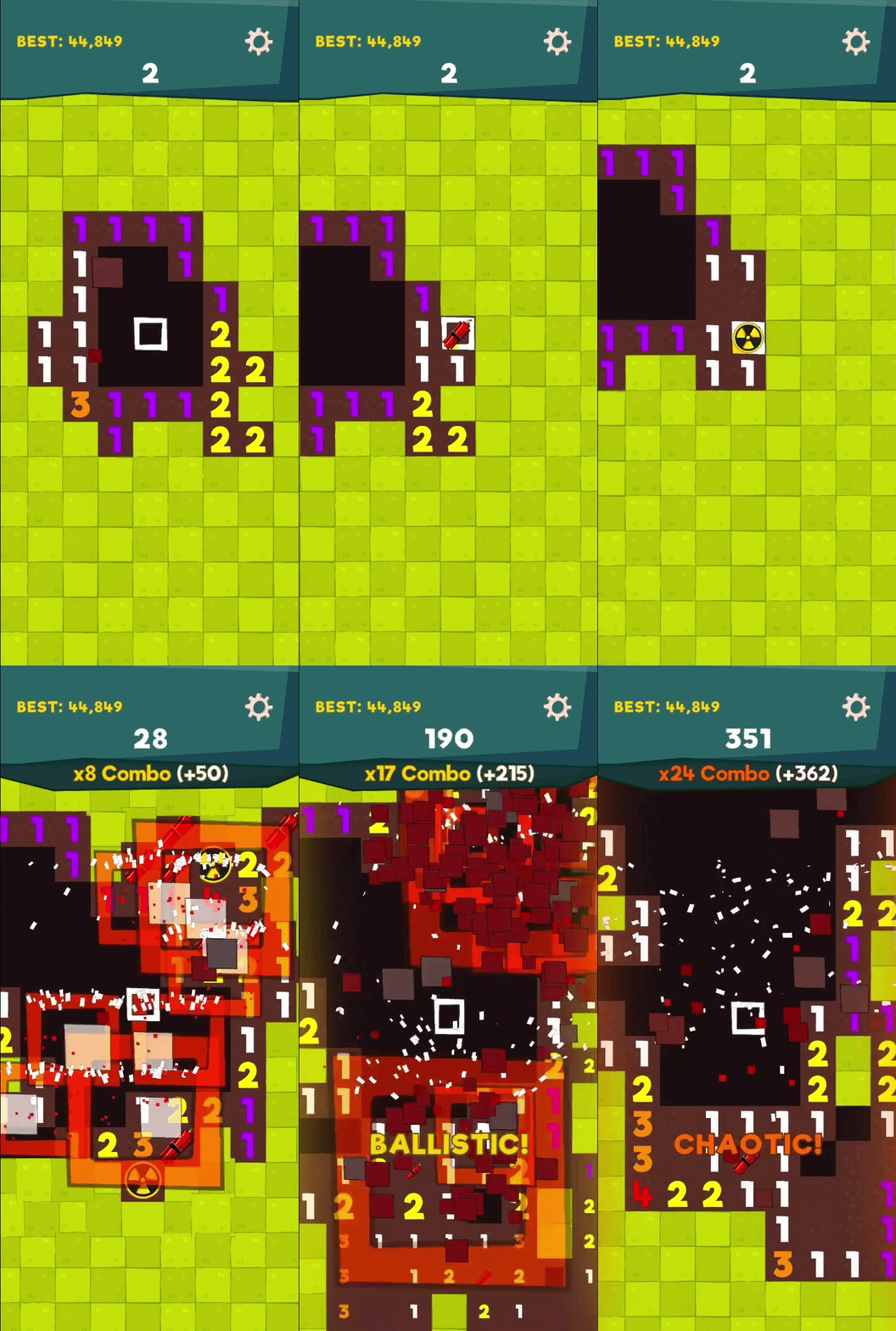
FINAL DESIGN ITERATION: The Breakthrough Pivot
-
The Pivot:
Changed the core action from carrying bombs to pushing and merging them.
-
Why It Worked:
It instantly fixed the spatial awareness pillar. Merging required deliberate effort, making the resulting blast feel earned rather than given.
-
The Math:
Reverted to a clean, move-based economy (reveal = -1 move, spikes = -10 moves, blasting = rewards moves). The threat was clear, the rules were transparent, and the puzzle elements finally shined.
Mechanical Evolution Summary

Personal Reflection
-
Friction vs. Depth (The "Punishment" Trap):
During my early iterations, I confused mechanical complexity with design depth. By adding "curses" (like void tiles and pushbacks) to the bombs, I thought I was creating emergent gameplay. Instead, playtesting revealed I was punishing players for engaging with the core loop. I learned that stripping away convoluted rules and focusing on a transparent move economy created far deeper strategic gameplay.
-
Aligning Player Verbs with Design Pillars:
For a long time, the core verb of the game was carrying bombs. It was functional, but it didn't support my spatial puzzle pillar. By changing the verb to pushing and merging, I instantly gave the game a physical, spatial dimension. I realized that if a game feels flat, sometimes you don't need a new feature, you need a better core verb.
-
Communication is a Mechanic:
My middle iterations failed because players couldn't read the game state. The radial timer was confusing, and the spike hazards lacked a clear threat level. Moving to a strict math-based UI (Move Costs and Blast Rewards) and standardizing the Minesweeper-style number clues taught me that if the player doesn't understand the rules instantly, the fun is lost in the translation.
-
The Value of "Killing Your Darlings":
As a solo developer, it is easy to get attached to systems I spent days coding. Dropping the complex environmental hazards (mud and rocks) and the radial timer was difficult, but necessary. Listening to the brutal playtest feedback ("blasting feels like punishment") was the only way I found the winning formula.
 Next Project