
MARKET MANIA
Project Details
Development Time | June 2024 - June 2025
- Team Size:
- 8 Students
- Genre:
- Co-Op, Arcade, Simulation
- Engine:
- Unity 6
- Platform:
- Windows PC
- Role:
- Game Designer, UI/UX Designer
Description
A four-player cooperative multiplayer arcade game where vegetable characters become supermarket employees. Players team up to perform daily store activities in a goofy manner, generating income for the supermarket before time runs out.
DOWNLOAD MARKET MANIA: Market Mania.exe
Target Experience
Four players should feel like they are gloriously, helplessly failing together, and loving every second of it.
The target emotion was joyful chaos: the specific feeling of a team that is overwhelmed, slightly panicking, and laughing at each other's mistakes. Think of the best rounds in Overcooked, nobody is perfectly efficient, but everyone is fully alive. The moment chaos tips into frustration or confusion, that feeling dies.
How we measured success: Our Alpha playtest revealed exactly when we lost it. When players started asking "where do I go?" instead of screaming "I've got it, I've got it!", the chaos stopped being fun and became cognitive load. The Directional Navigation redesign and full UI overhaul were not feature additions. They were direct interventions to protect the emotional experience the game was built around.
My Responsibility
-
Core Systems: Collaborated with co-designers to define and balance the core loop with our design pillars.
-
Design Iteration: Iterating on player navigation issues mentioned in the feedback lead to the "Directional Navigation System" to solve player navigation friction.
-
AI & Behavior Design: Partnered with programmers to design unique logic and behaviors for "Special" and "Troublemaking" customer archetypes.
-
UI/UX Design: Lead a complete overhaul of the UI/UX systems following Alpha feedback to improve player feedback and clear interface.
- Level Design: Owned the design of the tutorial and Level 1, handling the transition from whitebox/greybox to final set dressing.
Initial Design Decision
Mechanics
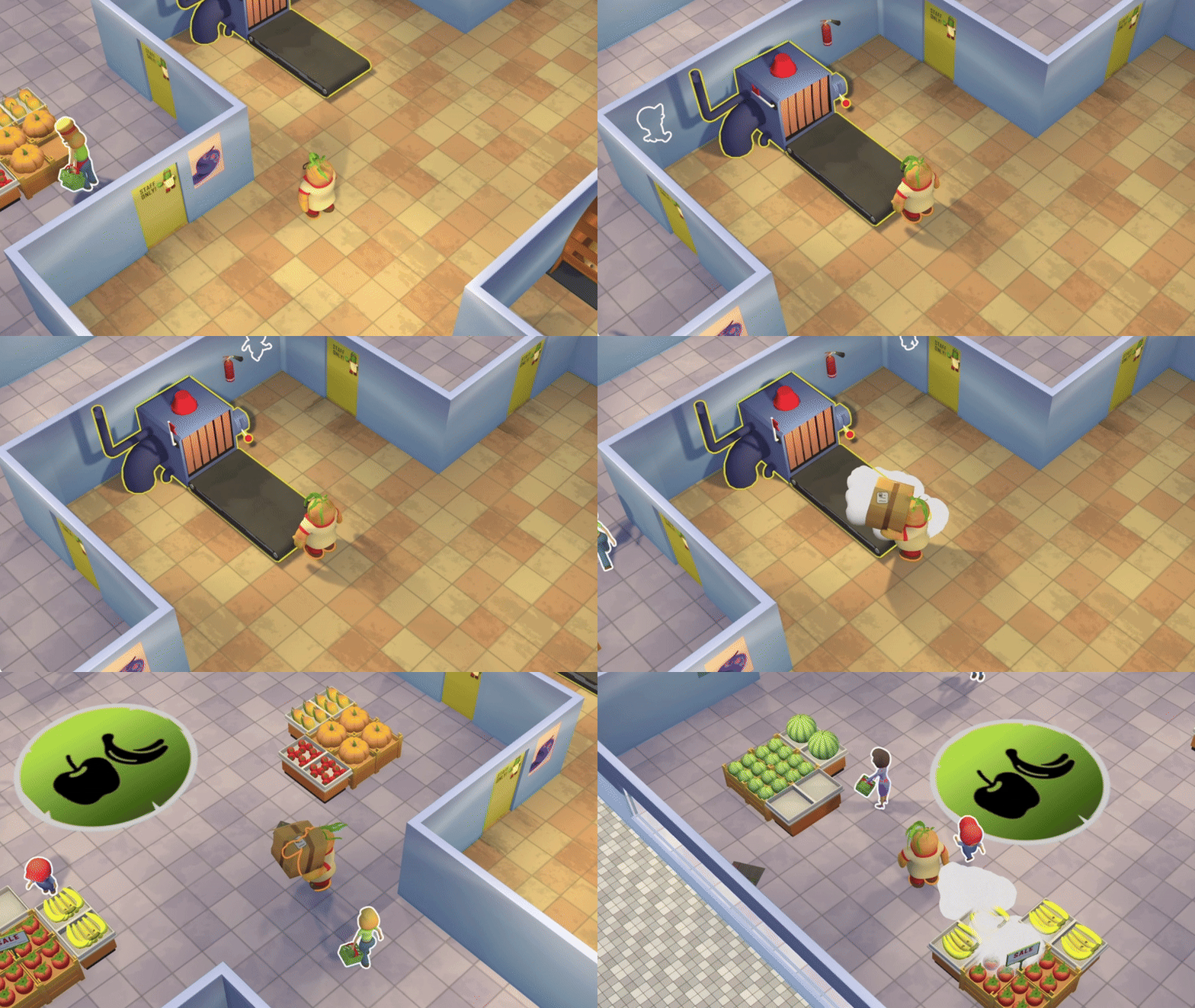
Restocking
Collect boxes from restocking machines and carry them to empty shelves, interacting again to refill.
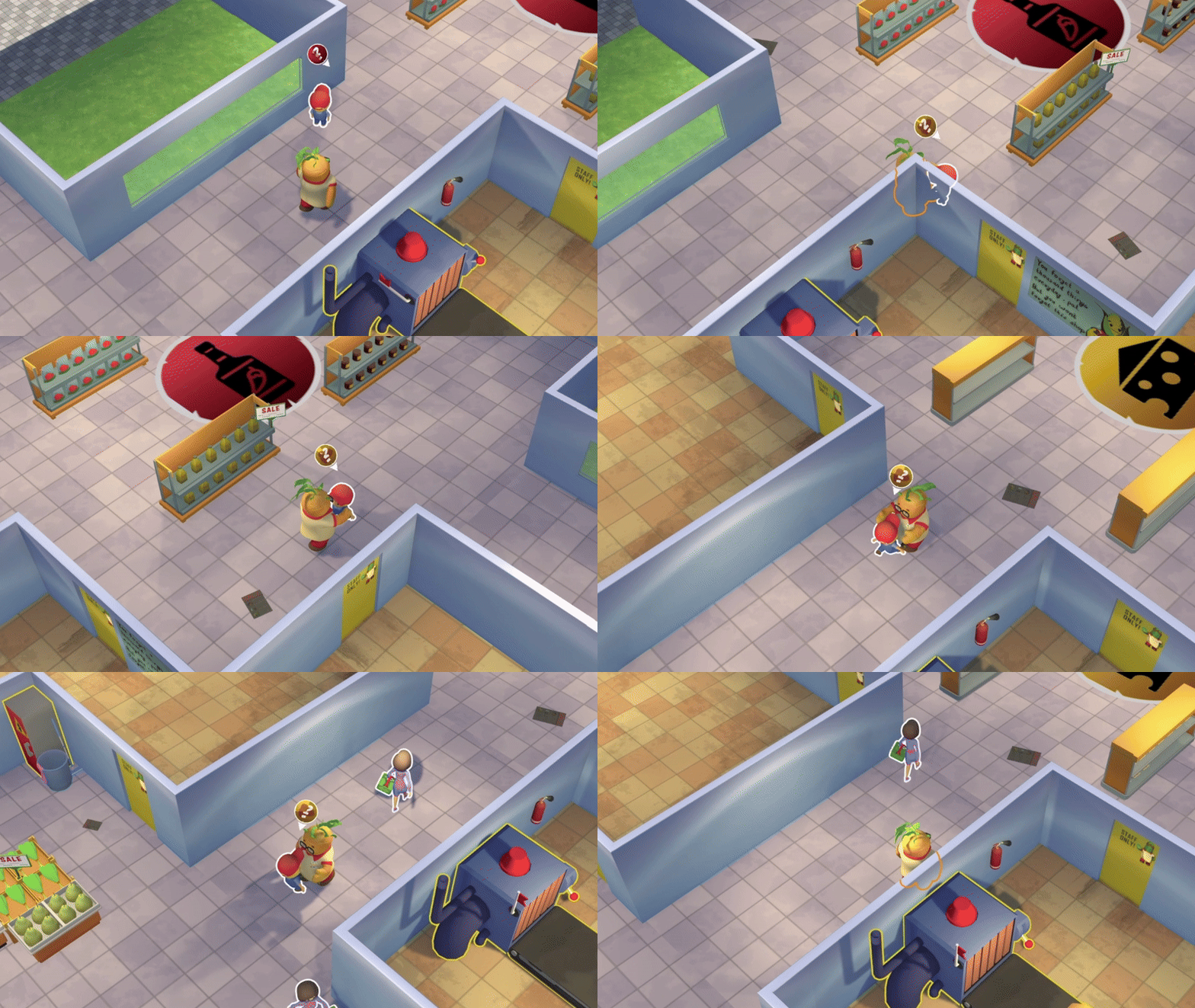
Assisting
Interact with clueless customers to pick them up, following UI head-arrows to automatically drop them at their desired store locations.
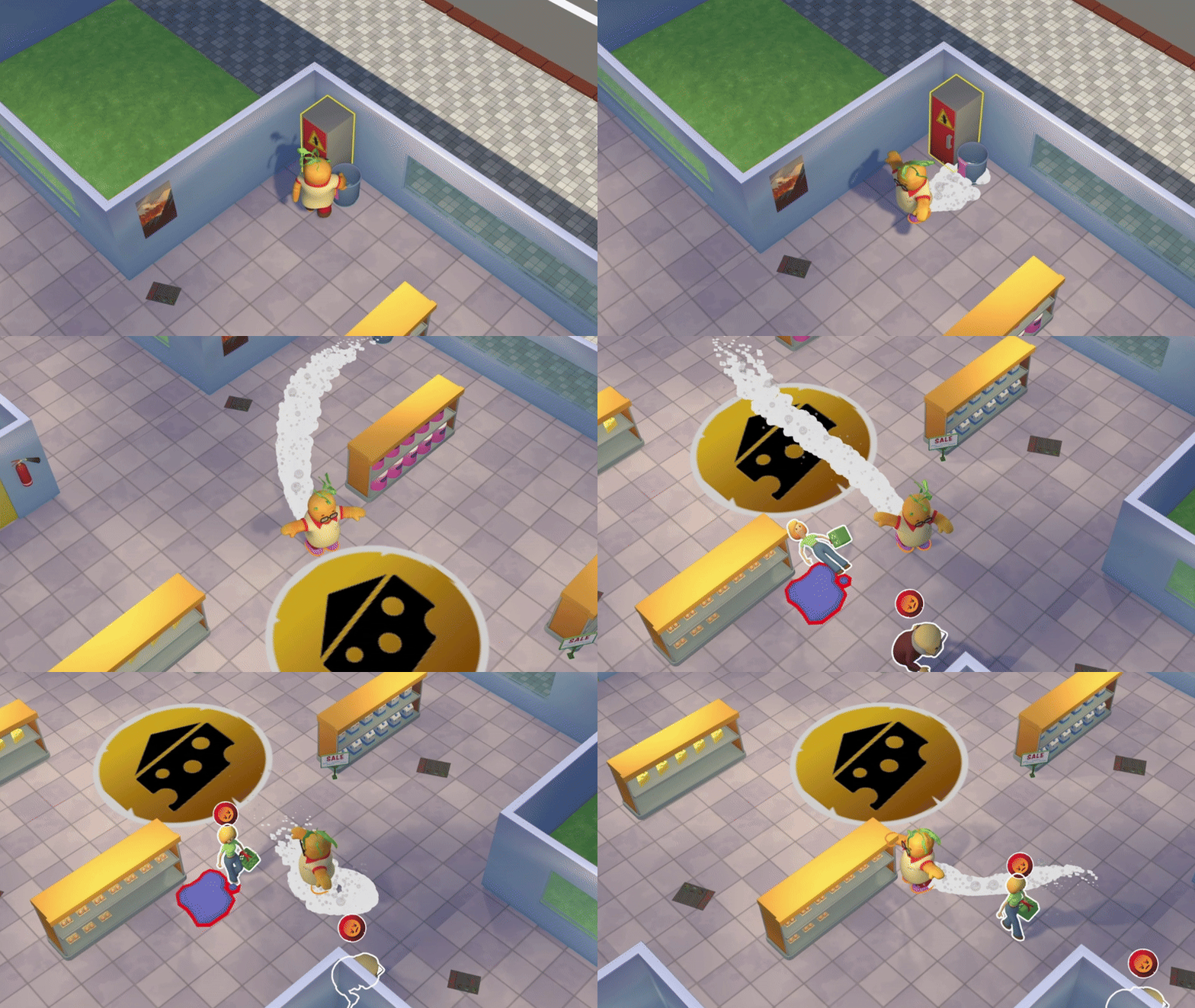
Cleaning
Equip "cleaning boots" at cleaning lockers to glide over floor puddles using movement keys.
Developed the Alpha Stage of the game under these Design Pillars.
Design Pillars
-
Pillar 1:
- Chaos Co-op Gameplay: The game must be built for cooperative play where things can and will go wrong.
-
Pillar 2:
- Fun & Simple Arcady Mechanics: Interaction should be instant and satisfying, avoiding "heavy" simulation mechanics.
-
Pillar 3:
- Tactical Prioritization: Players should spend their time deciding what to do, not looking for where to do it.
Playtest Feedback
According to most feedback, we failed to hit our design pillars 2 and 3.
65%
Which all shelves require restocking?
80%
Where do we have to drop customers?
55%
Cleaning feels good...but the customers leave immediately after falling!

Redesign Based on Feedback
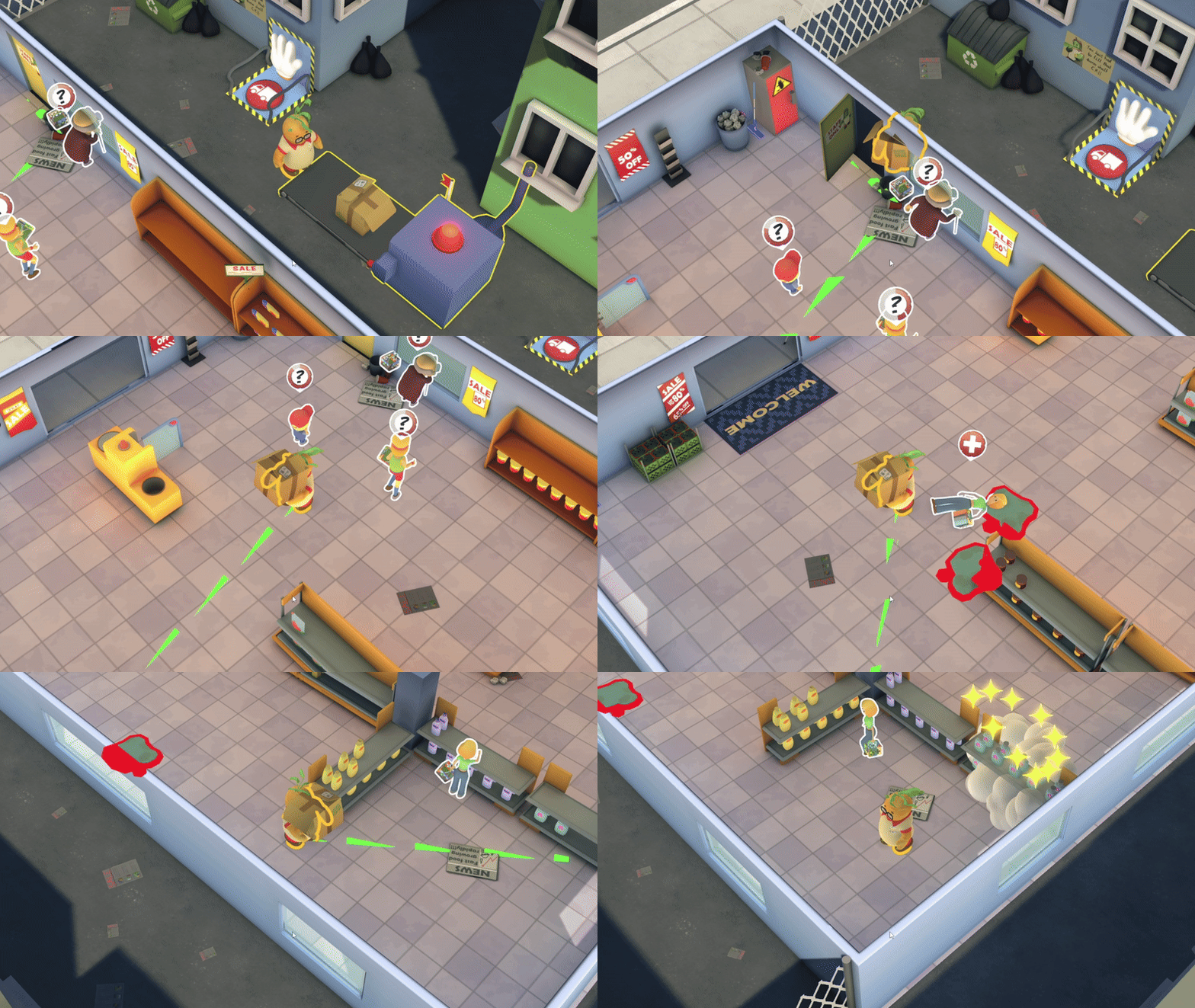
Designed a navigation system that wasn't just guiding lines, but an intentional mechanics.
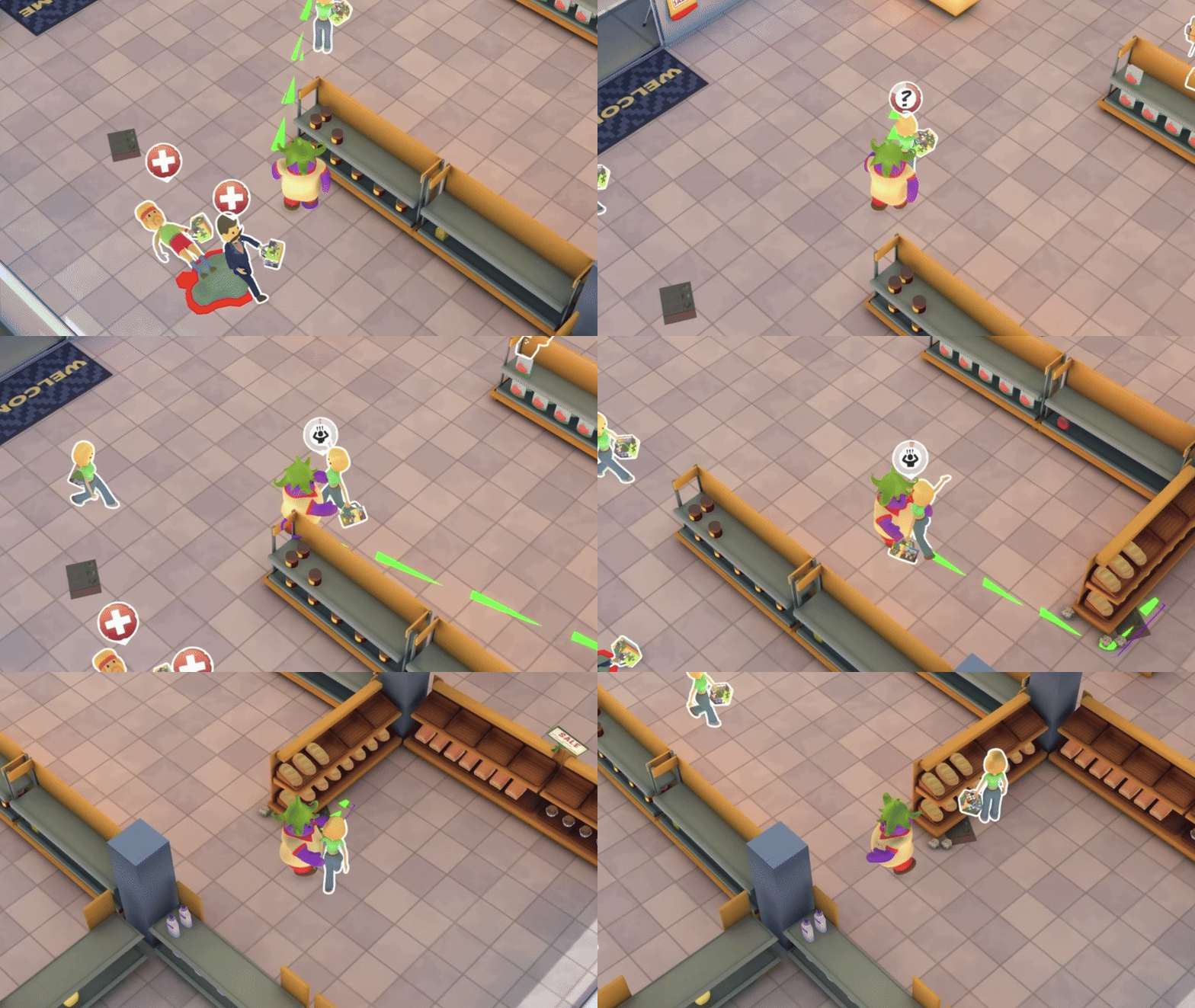
Manual Check: Players can press a button to see lines directing them to empty shelves or puddles.
Automatic Trigger: Once a customer is picked up, the line automatically appears to eliminate the "where do I go?" hesitation.
The Result: Shifted player focus from navigation to prioritization, trying to strengthen the pillar 2 and 3.
Mechanics
Restocking
Collect boxes for empty shelves, using the directional line to identify exactly which aisles require immediate inventory refills.
Assisting
Pick up helpless customers to automatically trigger a directional navigation line, guiding you directly to their intended store location.
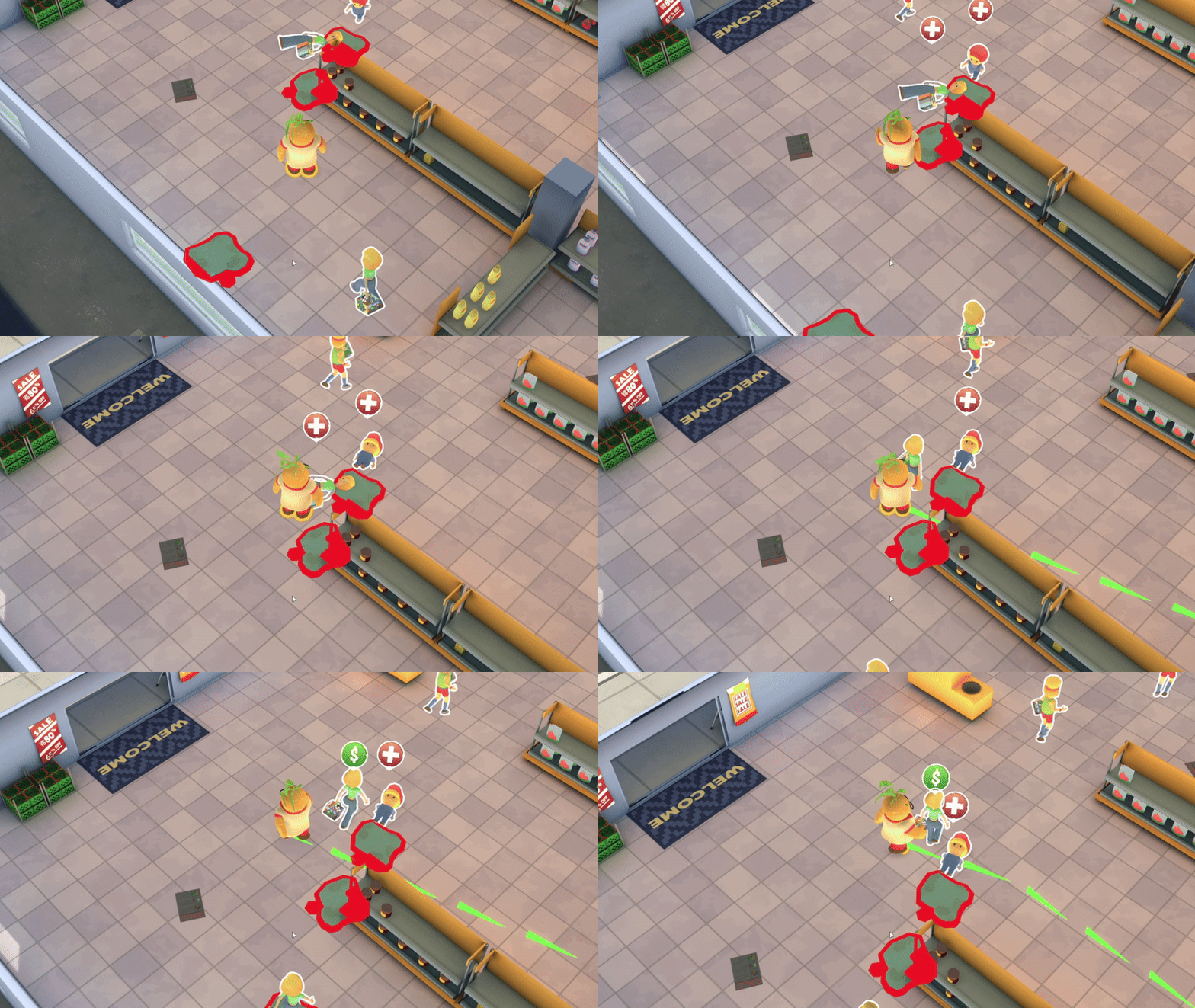
Cleaning
Equip boots to glide over puddles, but also interact with fallen customers to help them up before they leave.
Following the Alpha build, we used the MDA Framework (Mechanics, Dynamics, Aesthetics) to segregate player feedback and identify why our design pillars weren't being met.
- Mechanics (Rules): Players understood individual actions (E to interact) but felt the mechanics which involved navigation were unclear.
- Dynamics (System Behavior): The interaction between customer AI and player navigation created "Confusion", players weren't failing because of skill, but because of a lack of environmental feedback and information.
- Aesthetics (Emotional Response): The intended "Arcady Fun" aesthetic was being replaced by "Frustration" and "Cognitive Overload."

The redesign helps players focus on prioritizing their time and processing as many customers as possible to maximize earnings from each one.
While the mechanics are currently buggy, the core intent are clearly there.

UI/UX
Initial Design Decisions
My primary goal was to create a HUD that was informative yet out of the way:
Corner-Split HUD
Timer and Money bars were placed at opposite corners to maximize the view of the central screen gameplay.
Overhead Product UI
When a customer needed help, the specific product image appeared over their head to guide the player.
Task Remaining UI
A simple counter showing the number of tasks needing your attention.


Feedback (IGDC Playtest)
Feedback showed that my "out of the way" design actually caused Information Blindness:
- Cluttered Eyesight: Splitting critical data (Time/Money) into two corners forced players to scan the entire screen constantly, causing eye fatigue.
- Unclear Navigation: Players still felt unsure where to go, even with the task counter.
- Obscured Progress: The product image over customers heads was too small, completely hiding their "Waiting Meter." Players couldn't tell who was about to leave in a huff.

The Redesign Solution
I pivoted the UI/UX to focus on Thematic, Clarity and Navigation:
Simplified HUD:
Combined the Money and Time Bar into a single corner. This reduced visual clutter and allowed players to check their status with a single glance.
Standard Assistance UI:
Created a new overhead UI for customers that integrated a visible waiting meter with the assistance request icon. This removed the "challenge" of remembering product appearances and prioritized the urgency of the task.
The "To-Do List" UI:
Redesigned the task counter to look like a physical checklist. When activated, it now triggers the Directional Navigation lines, bridging the gap between UI and gameplay.


Personal Reflection
Market Mania taught me that a designer’s most important job is to listen to the player.
The transition from the Alpha build to the final version was driven entirely by our 'Test & Iterate' pipeline and a rigorous MDA analysis.
By introducing the directional line and redesigning the UI, I learned how to protect our design pillars (Chaos & Fun) while ensuring the game remains accessible and player-friendly.