
SET-7
Project Details
Development Time | September 2025 - December 2025
- Team Size:
- 2
- Genre:
- Roguelike Deck-builder | Arcade "Push Your Luck" Card Game
- Engine:
- Unity 6
- Platform:
- Mobile
- Role:
- Solo Game Designer, UI/UX Designer
Description
Set-7 is a sequence-building roguelike where the deck is your life. Players must manage a 52-card deck to hit a self-imposed target. The game centers on a high-stakes decision at the end of every successful round: Secure the profit or risk it all for a higher score.
Target Experience
The player should feel the specific anxiety of standing at the edge of a cliff they chose to walk to.
SET-7 is not about the fear of bad luck. It's about the delicious tension of a risk you took with full knowledge of the consequences. Every discard, every decision to push for a perfect 7-card sequence instead of cashing out, these should feel like choices the player owns completely, so that when it collapses, the feeling is "I pushed too far" rather than "the game cheated me."
How we measured success: The clearest signal was players saying "one more round" immediately after a loss. A loss that felt unfair produces frustration and abandonment. A loss that felt earned produces the urge to try again smarter. Our iteration from the soft penalty system (Stage 2) back to high stakes (Final Design) was driven entirely by chasing that second feeling.
Design Pillars
-
The Thrill of the Cliff Edge: Every discard should feel like stepping closer to a drop you chose to take.
-
Earned Tension: The fear of losing should feel deserved, not arbitrary, so the player owns every outcome.
- The Dopamine of Discipline: The best moments aren't lucky draws, they're when careful play explodes into a massive multiplier.

The Design Journey
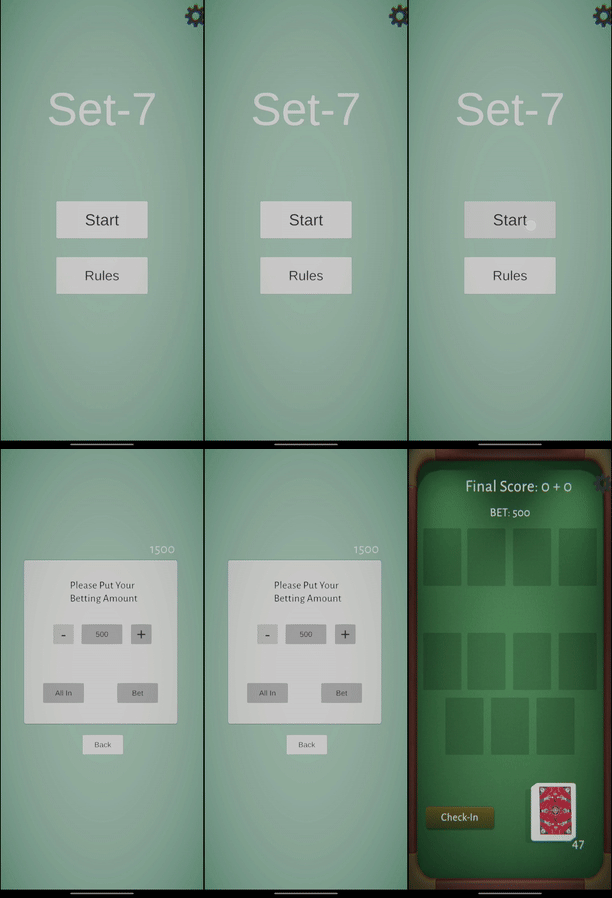
Stage 1: The "Drag & Drop" (Proof of Concept)
Player Objective:
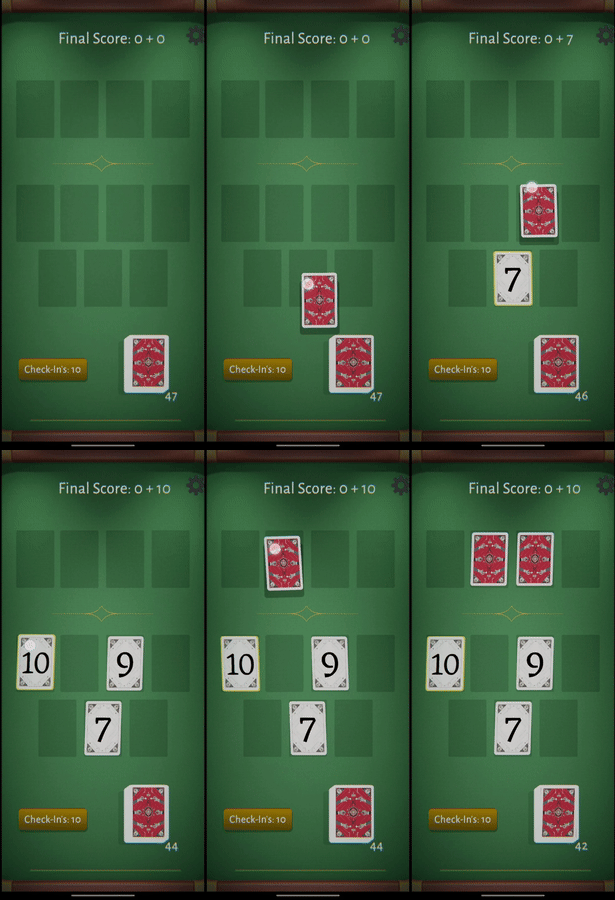
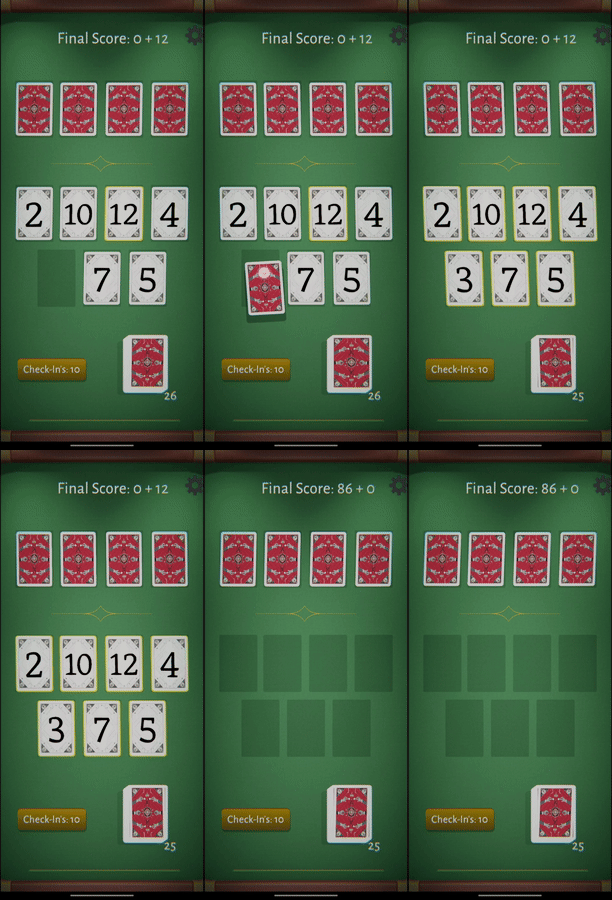
Maximize your total score by "checking-in" sets of non-duplicate cards from a standard 52-card deck. Players must navigate the risk of a total score reset while managing a limited resource of 10 Check-ins per game.
Core Gameplay:
- The Draw: Players draw cards one by one from the deck.
-
Slot Management:
- Active Slot (Revealed): Cards placed here are visible and count toward the current set.
- Reserve Slot (Hidden): Players can stash a card face-down to mitigate immediate risk.
-
The Gamble: Players "risk their luck" by moving unknown cards from the Reserve to the Active Slot to attempt to reach a full 7-card set.
Win/Loss Condition:
-
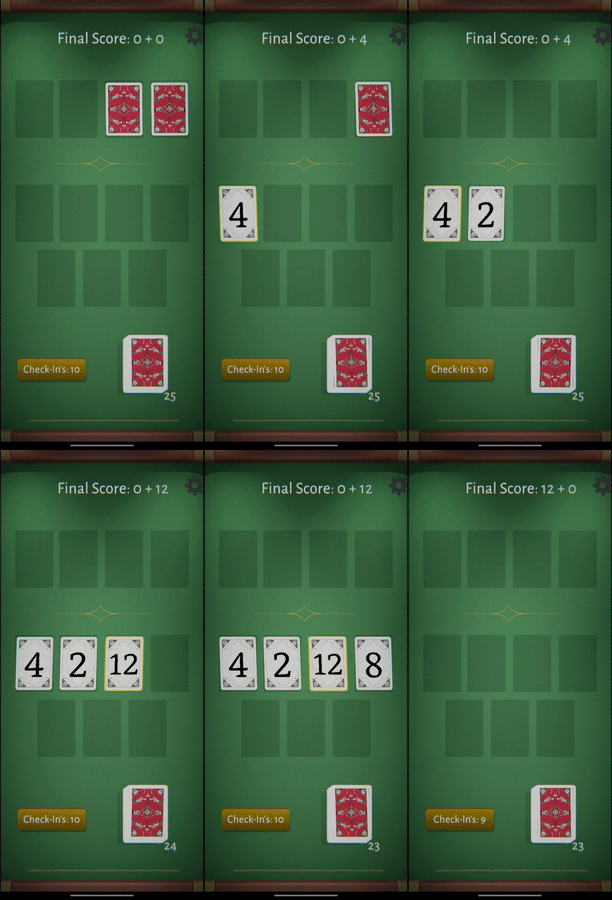
Successful Check-in (The Win): Players can choose to end a round at any time by using one of their 10 Check-ins.
- Complete Set (7 Cards): The Sum of all card values is added to the total score.
- Incomplete Set (1-6 Cards): Only the value of the highest card in the set is added to the score.
-
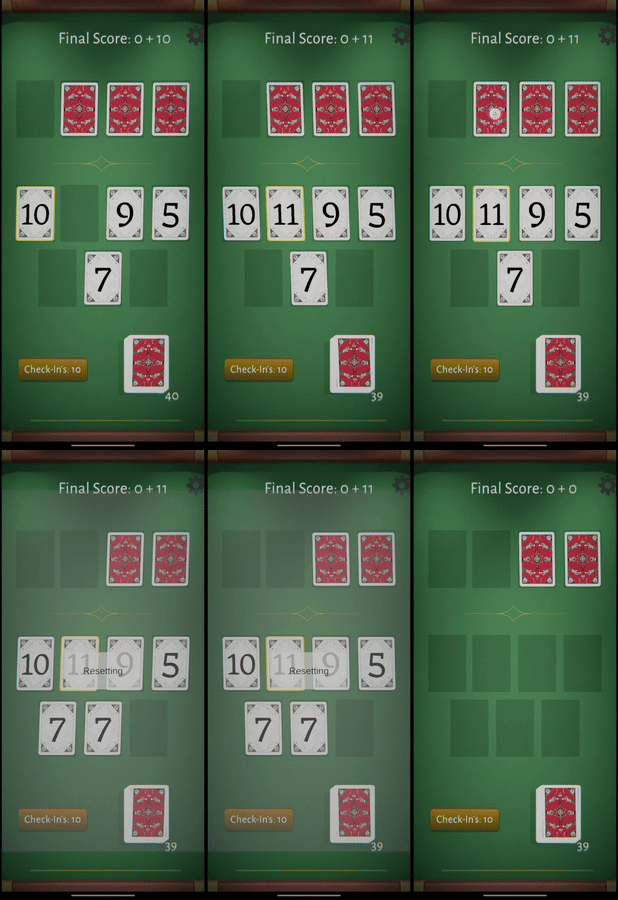
The Bust (The Loss): If a card with a duplicate value enters the Active Slot, the round ends automatically. The current set is discarded, the potential score for that round resets to 0, and the cards are wasted.
The Design Problems:
- The core frustration lies in the resetting the score to 0 on Bust.
- The uncontrolled/uninformed RNG of cards from the deck. Players are forced to play from their gut-feeling with no much information of the next card spawned.
- To improve player agency and retention, the design must shift from "gut feeling" to "calculated risk."
Stage 2: The "Swap & Soft Penalty"
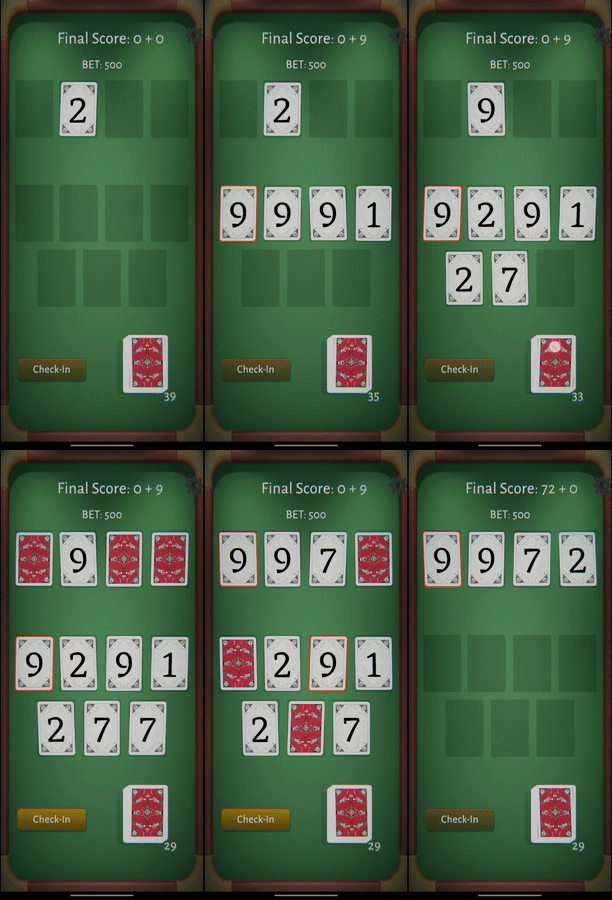
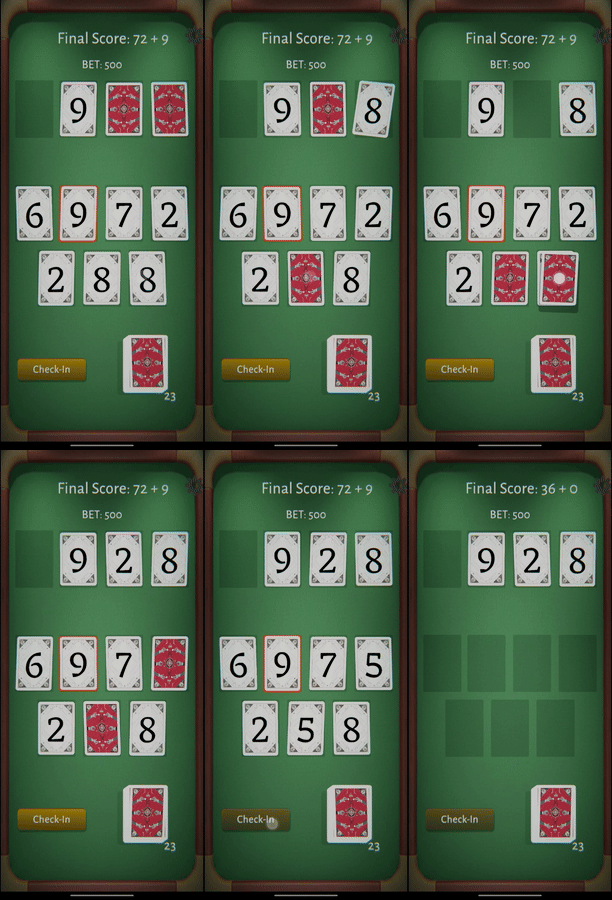
Attempting to fix the frustration of Stage 1, I introduced more player control and reduced the "Bust" impact.
Player Objective:
Successfully build and "Check-in" sets of cards from a 52-card deck to beat a self-imposed Bet Score. The game continues as long as there are cards in the deck and the player can meet the score requirement.
The Bet System (Dynamic Difficulty)
- Entry: Before the game starts, players bet in-game currency.
- The Goal: This bet generates a Target Score that must be reached before the deck runs out.
-
The Stakes: If the deck is empty and the Target Score is not met, the bet is lost. If the Target is exceeded, the player wins the round and earns rewards based on the surplus.
Core Gameplay & Risk Mitigation:
- Unlimited Check-ins: Players can bank their current set at any time. There is no limit to how many times a player can check-in.
-
The Swap Mechanic: When a duplicate card is drawn into the Active Slot, the player can choose to swap it with a face-down card from the Reserve Slot.
- The duplicate moves to the Reserve and becomes revealed.
- The new card moves to the Active Slot but remains face-down.
-
The validity of the set is only revealed upon Check-in.
Win/Loss Condition:
- Soft Penalty: Instead of a full reset of the score, a duplicate card during check-in will only deduct 50% of the current accumulated points.
-
Rest everything else is the same!
The Design Problems:
- The "Soft" penalty killed the tension. Without the fear of losing everything, the "Arcade Gambling" pillar was lost. The game felt "safe" and boring, proving that high stakes require high consequences.
- The meta gameplay (secondary gameplay) was lacking depth and clarity, as to how do players try and achieve score in thousands or more if its only sum of card values.

The Final Design
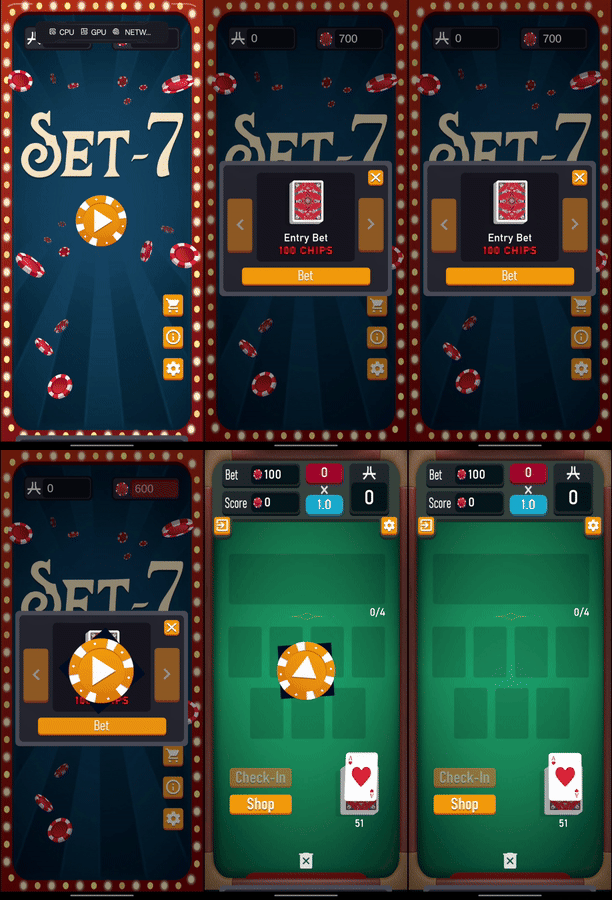
Core ConceptSet-7 is a sequence-building roguelike where the deck is your life. Players must manage a 52-card resource to hit a self-imposed target. The game centers on a high-stakes decision at the end of every successful round: Secure the profit or risk it all for a higher multiplier.
Player Objective
Constantly beat the "Buy-in" score by building sequences before the deck runs out.
-
The Buy-In: Players choose a deck to start. The cost of the deck acts as the initial Target Score.
- The Resource: The 52-card deck is the timer. If it empties before the Target Score is reached, the player loses their bet.
The Round Cycle
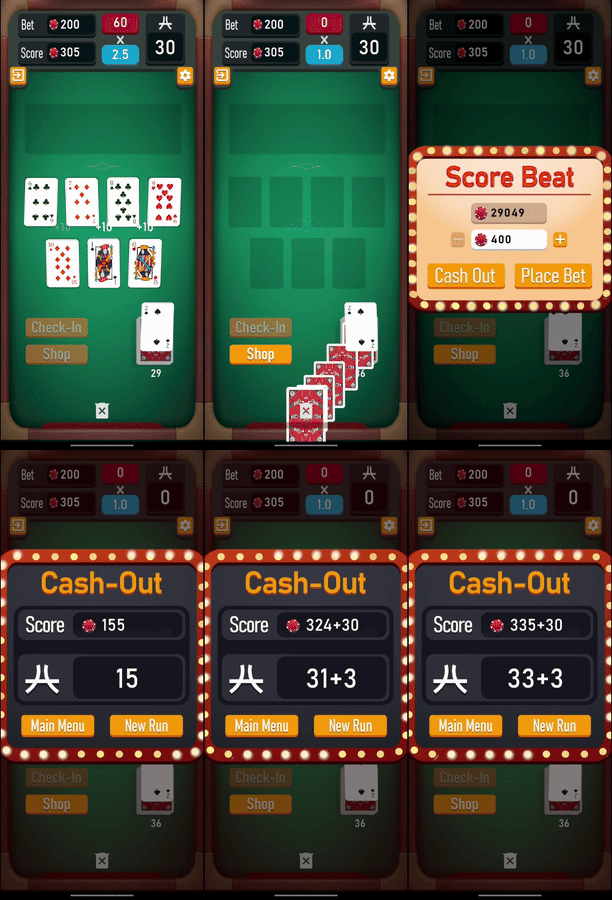
A round ends immediately once the player’s current score meets or exceeds the Target Score. Upon completion, the player must choose:
-
Cash-Out: End the run, collect all accumulated in-game currency, and return to the menu.
- Bet More: Place a new, higher bet. This increases the Target Score for the next round but allows the player to continue building their score into the thousands or lakhs using their current Power Cards.
Gameplay Mechanics
-
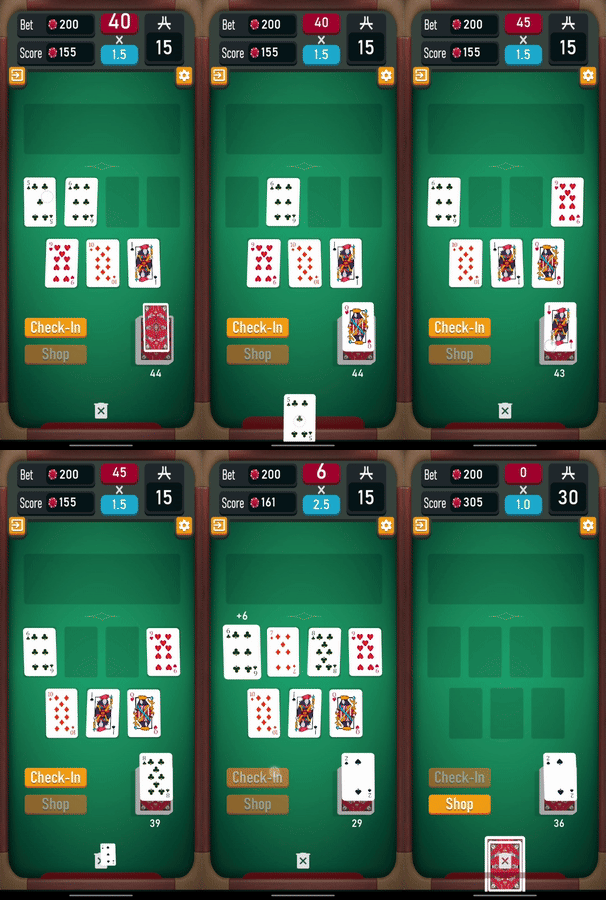
Sequence Building: Create ascending or descending sequences of 3 to 7 cards (e.g., J-Q-K-A-2). Suits are ignored; only the numerical/face value matters.
-
The Reveal: Only the top card of the deck is visible.
-
Discard System: Players can discard unwanted cards. Discarded cards are gone for the duration of that round, depleting the "timer."
- Check-In: Players bank sequences of 3+ cards to gain score and "Flushes."
Scoring & Power-Ups
-
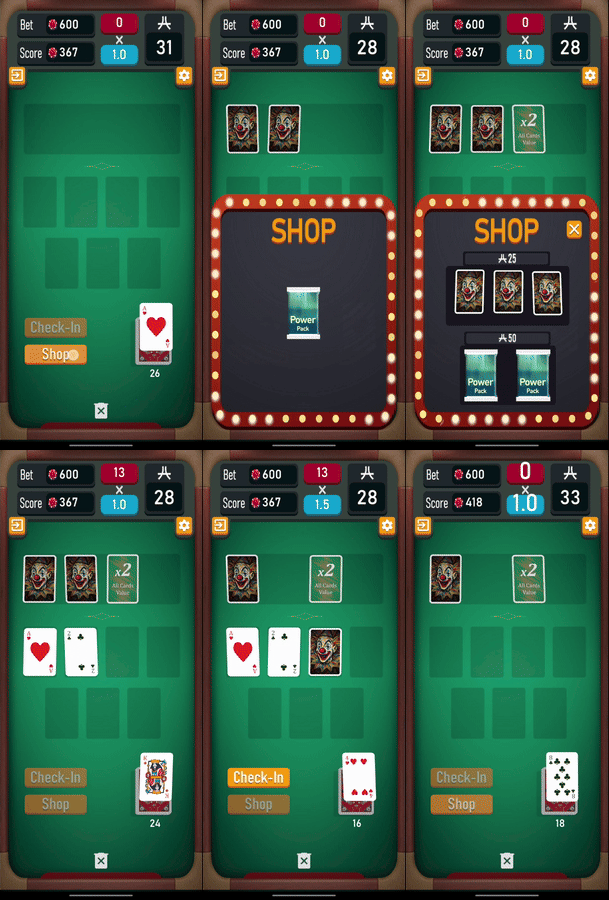
Partial (3–6 Cards)
- Score Multiplier: Sum x 1.5
- Flush Reward (Currency): 1 Flush per card
-
Perfect (7 Cards)
- Score Multiplier: Sum x 2.0
- Flush Reward (Currency): 7 Flush
Flushes: Spent between rounds or during play to buy Power Cards (Jokers, x2 Multipliers, etc.) to scale the score exponentially.
The Penalty (The Bust)
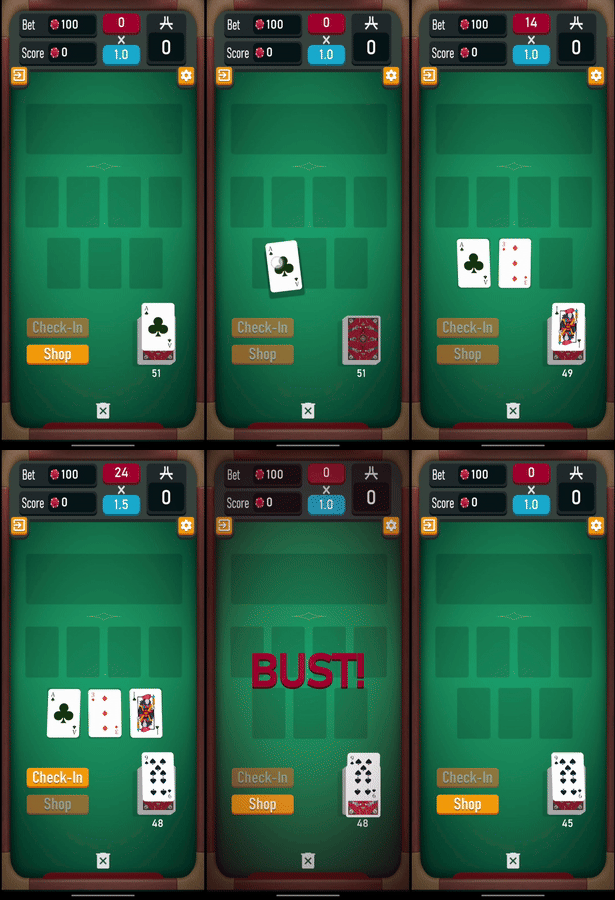
If a player attempts to check-in an invalid sequence:
- The Penalty: 3 cards are forcibly discarded from the deck.
- The Result: No score is lost, but the player has fewer "turns" remaining to hit their target, increasing the pressure.
Gameplay Flow

Personal Reflection
It taught me that sometimes, to make a game feel more like 'luck,' you actually have to give the player more 'control' over the math
Set-7 evolved from a simple card-flipping game into a complex system of resource management. By introducing the 'Solitaire' sequence logic and the 'Flush' economy, I moved the game away from pure RNG into a space of high-level tactical planning.
 Next Project