
Where the Bird Sings
Project Details
Development Time | December 2025 - May 2026
This game was built around one question: can mechanics alone make a player feel someone else's pain?
- Team Size:
- 5
- Genre:
- Puzzle-Adventure Platformer / Narrative Adventure
- Engine:
- Unity 6
- Platform:
- PC
- Role:
- Game Designer, Developer, Level Designer
Description
'Where the Bird Sings' is a 2D puzzle-adventure platformer about physical limitation and the power of adaptation. Players inhabit a young girl with a leg condition who climbs a massive mountain, learning to move not by overcoming her limitation, but by working with it.
This is a graduation project dedicated to my sister, who had faced the same condition. The core gameplay loop, finding creative solutions to physical barriers, mirrors the joy and resilience she demonstrates in her daily life.
Target Experience
The players should feel what it means to live inside a body that is uncooperative and unstable, not through a cutscene, but through player controls.
We wanted two specific emotions: first, genuine frustration when the terrain defeats you, followed by a deep, earned satisfaction when you adapt and push through.
The goal was never to make the player feel pity for the character. It was to make them feel her determination from the inside.
How we measured success: In playtests, the signal we watched for wasn't whether players completed the level, it was whether they paused before a difficult section, took a breath, and tried again anyway. That hesitation meant the weight of her condition was being felt. When players started managing the Tight/Loose states instinctively rather than analytically, we knew the mechanics had become empathy.
My Responsibilities
-
Designed and implemented the core game systems and player movement mechanics.
-
Led the Design Pillar for the project and supported team members across all roles.
-
Collaborated with the narrative designer to plot the story within the level design.
-
Managed the level design workflow from initial greyboxing to the final polished draft
- Conducted playtesting sessions, collected player feedback, and aligned the game's design to deliver the intended player experience.
Defining Design Pillars
-
Vision > Excuses: We wanted the players to closely feel the pain and frustration of the character's condition while traversing through the world. The goal is to highlight the intense emotional satisfaction of persevering and achieving your goal despite immense physical struggle.
-
Nature is the Teacher: We avoided traditional "on-the-face" tutorials. Instead, the world is the guide, requiring players to learn new mechanics through environmental cues and discovery.
-
Environment is the Enemy: The world was not built for someone with her condition. Therefore, common terrain becomes a series of obstacles, making the environment the primary opposing force.
- No Deaths: This isn't a game about failure, it’s about persistence. The challenge lies in overcoming the obstacle, not in restarting. The game loop focuses on trying, struggling, and eventually succeeding.

Phases of Design Iterations
Iteration 1: Establishing "The Struggle" & Discovery
Goal: Translate physical limitations into a compelling gameplay loop using placeholder animations, focusing heavily on weight, consequence, and environmental learning.
-
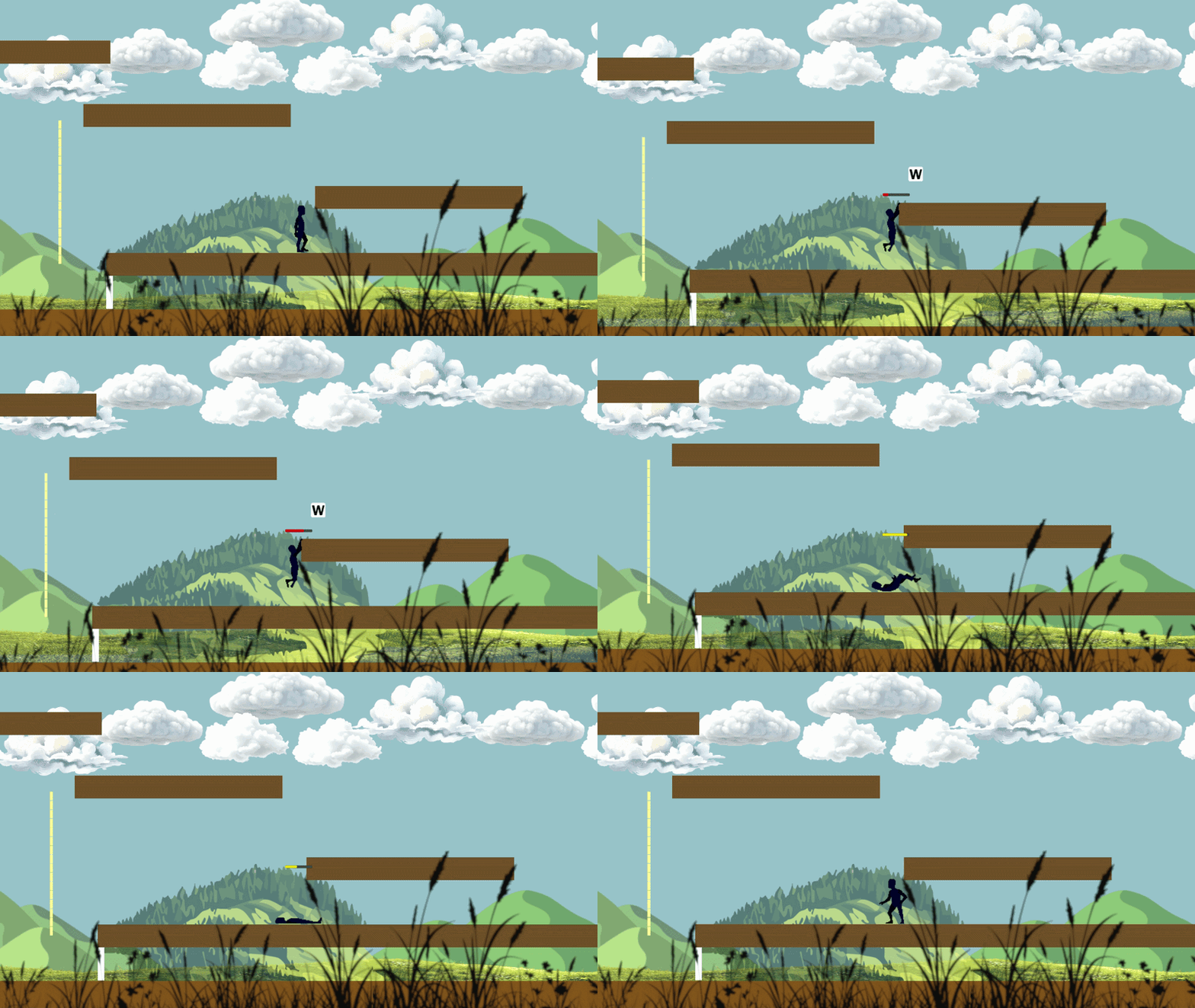
Pain Meter (vs. Stamina): Strenuous actions build 'Pain'. Hitting 100% pain triggers a vulnerable fall.
-
Intent: To reject standard 2D platforming in favor of realistic physical limitations, shifting the player's focus from managing energy to empathizing with her leg condition.
-
Intent: To reject standard 2D platforming in favor of realistic physical limitations, shifting the player's focus from managing energy to empathizing with her leg condition.
-
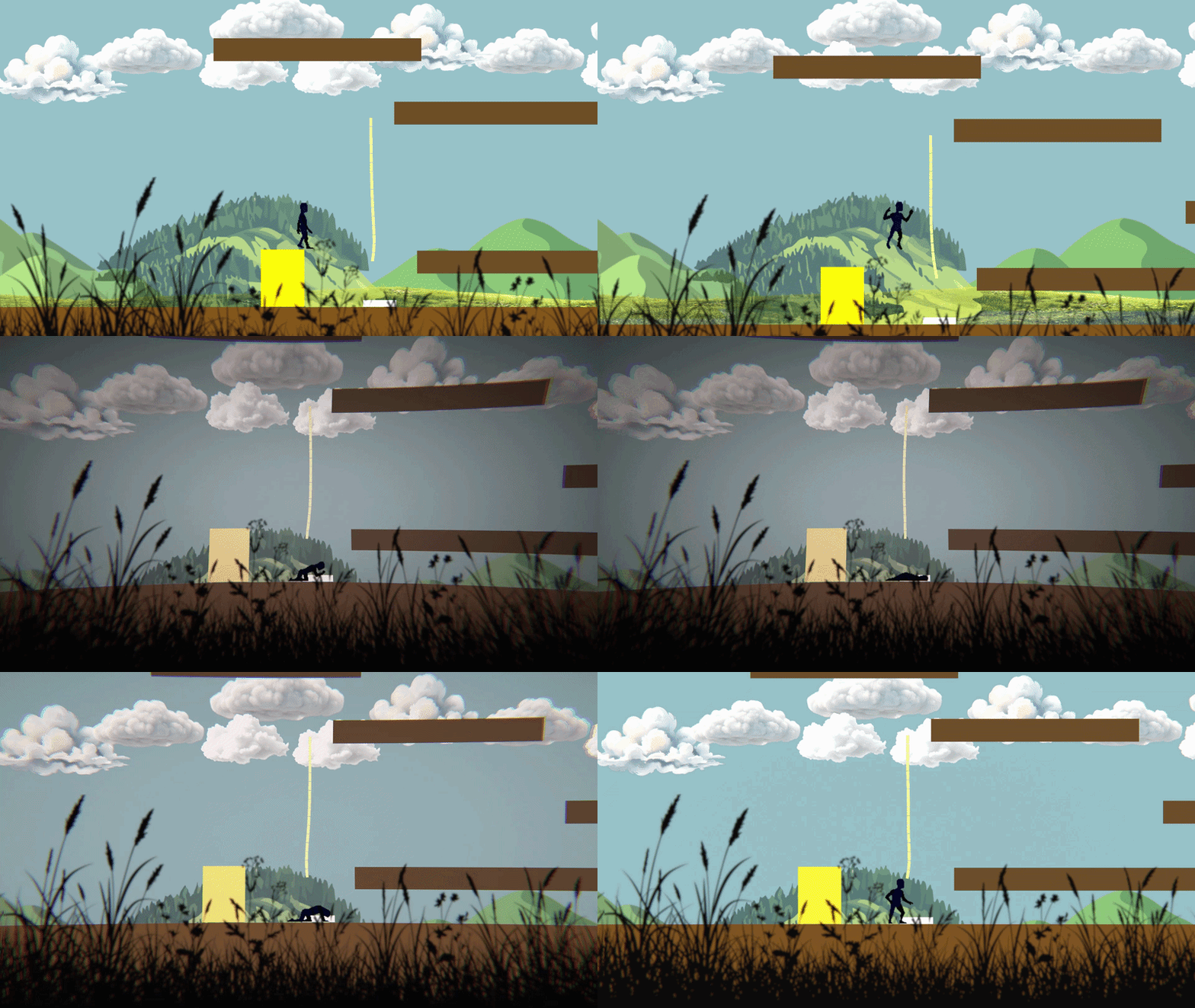
The "Trip Down" State: Landing from even minor heights causes the character to physically trip and enter a recovery state.
- Intent: Reinforces the "Environment is the Enemy" pillar by establishing that her weak leg and poor balance make even normal drop heights painful. This turns simple drops into calculated risks, forcing players to rethink traditional platforming routes.
-
Ledge Climbing & Heavy Physics: Implemented a slow, deliberate pull-up mechanic alongside "heavy" jump arcs and gravity.
-
Intent: Visually and mechanically communicates that while her lower body is restricted, she has developed significant upper-body strength to adapt.
-
Intent: Visually and mechanically communicates that while her lower body is restricted, she has developed significant upper-body strength to adapt.

Iteration 2: Playtest Feedback & Refinement
Goal: Address playtest feedback showing that standard platforming tropes (like jumping) diluted the emotional impact of her condition. Double down on the "Movement is Struggle" pillar.
-
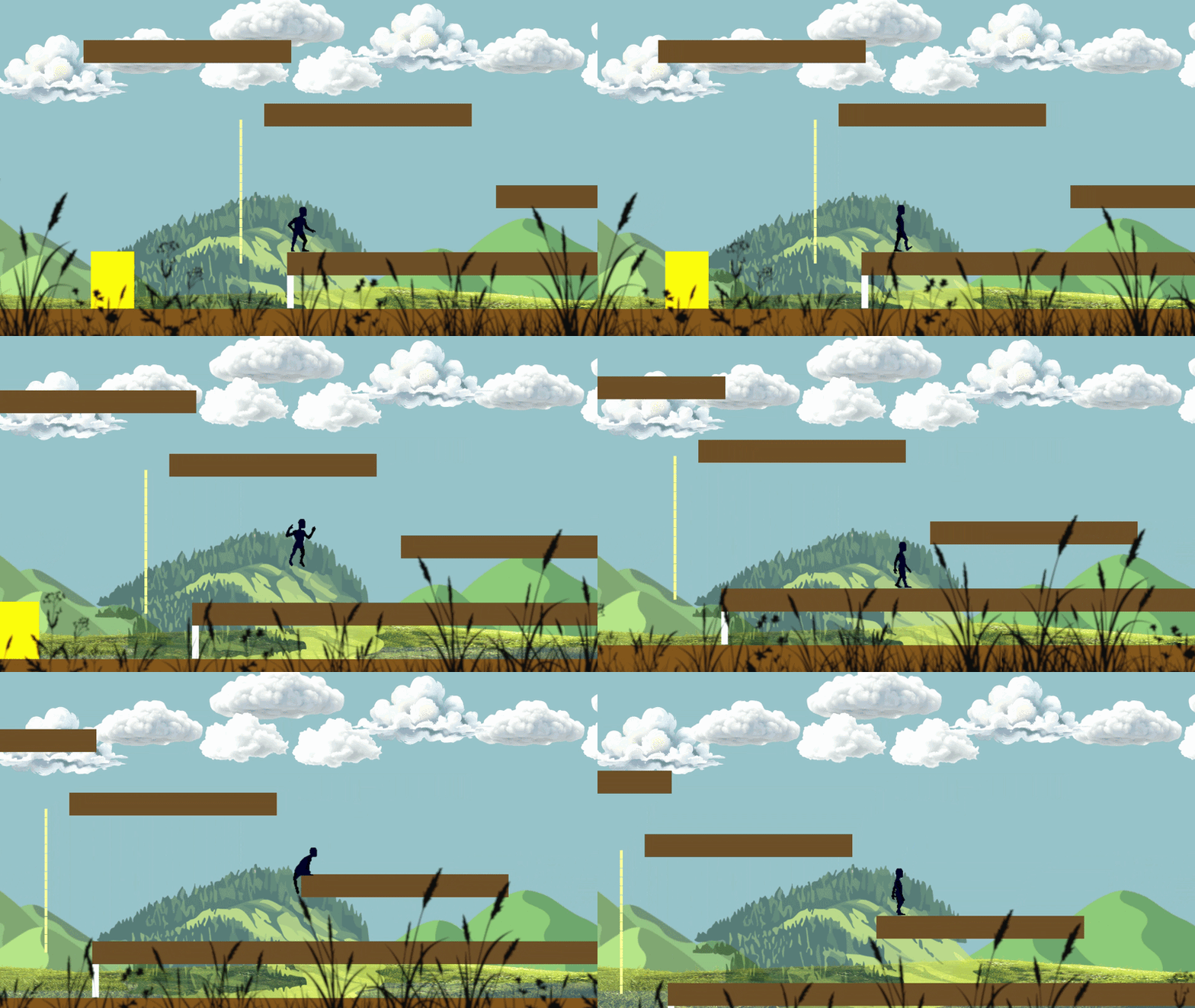
Replaced "Jump" with "Lunge": Completely removed the standard vertical jump, replacing it with a horizontal lunge.
-
Intent: Jumping took away the feeling of having a weak leg and poor balance. Replacing it with a forward horizontal lunge (inspired by Langdi) tied to a pain penalty ensures the player actively feels the "heaviness" of her movement.
-
Intent: Jumping took away the feeling of having a weak leg and poor balance. Replacing it with a forward horizontal lunge (inspired by Langdi) tied to a pain penalty ensures the player actively feels the "heaviness" of her movement.
-
Grounded Ledge Reach: Players can no longer jump to grab a ledge; they can only reach and pull up on ledges accessible directly from standing.
- Intent: To emphasize the character's limitations by removing aerial mobility. Keeping the movement strictly grounded forces the player to respect the environment's scale.
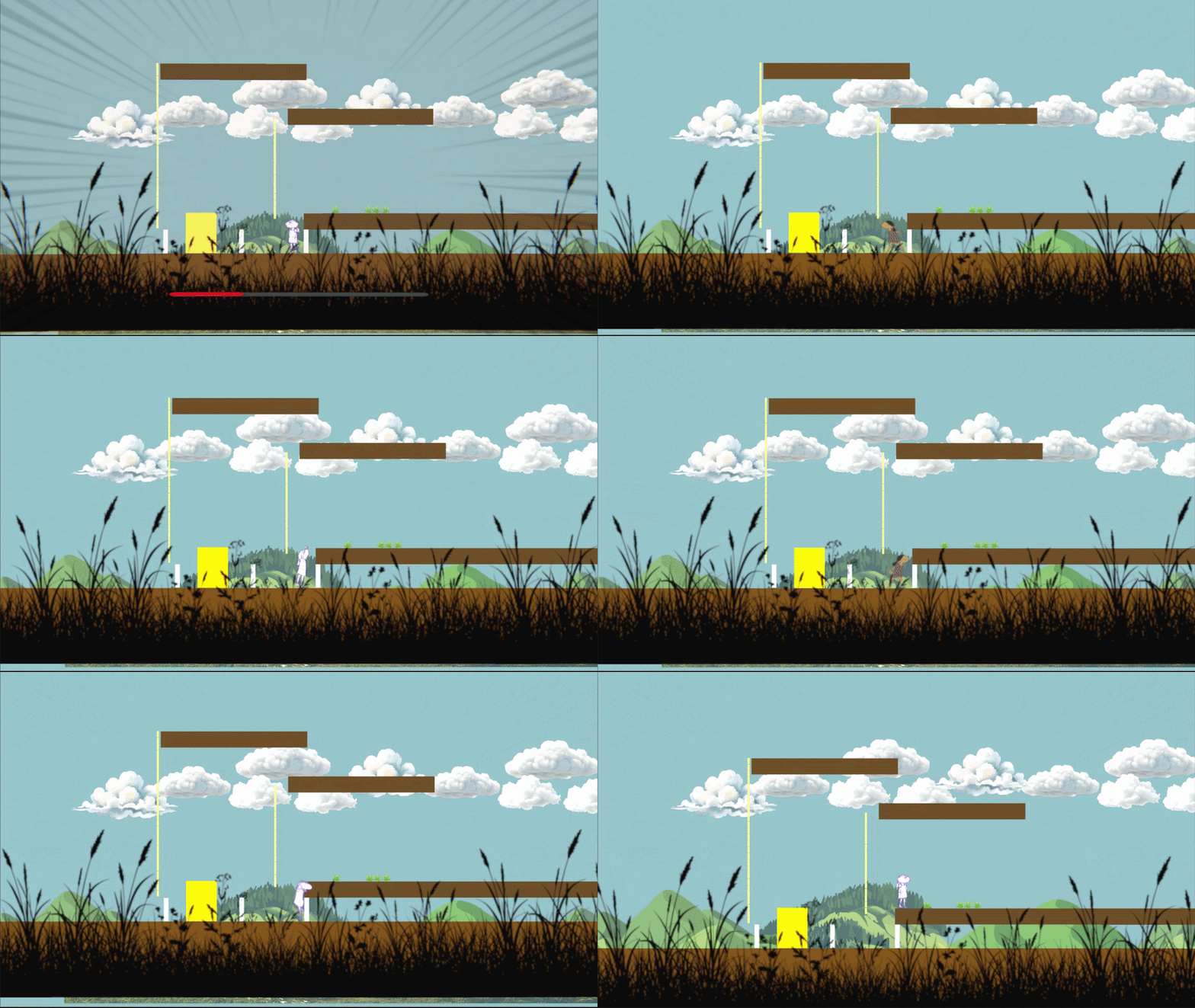
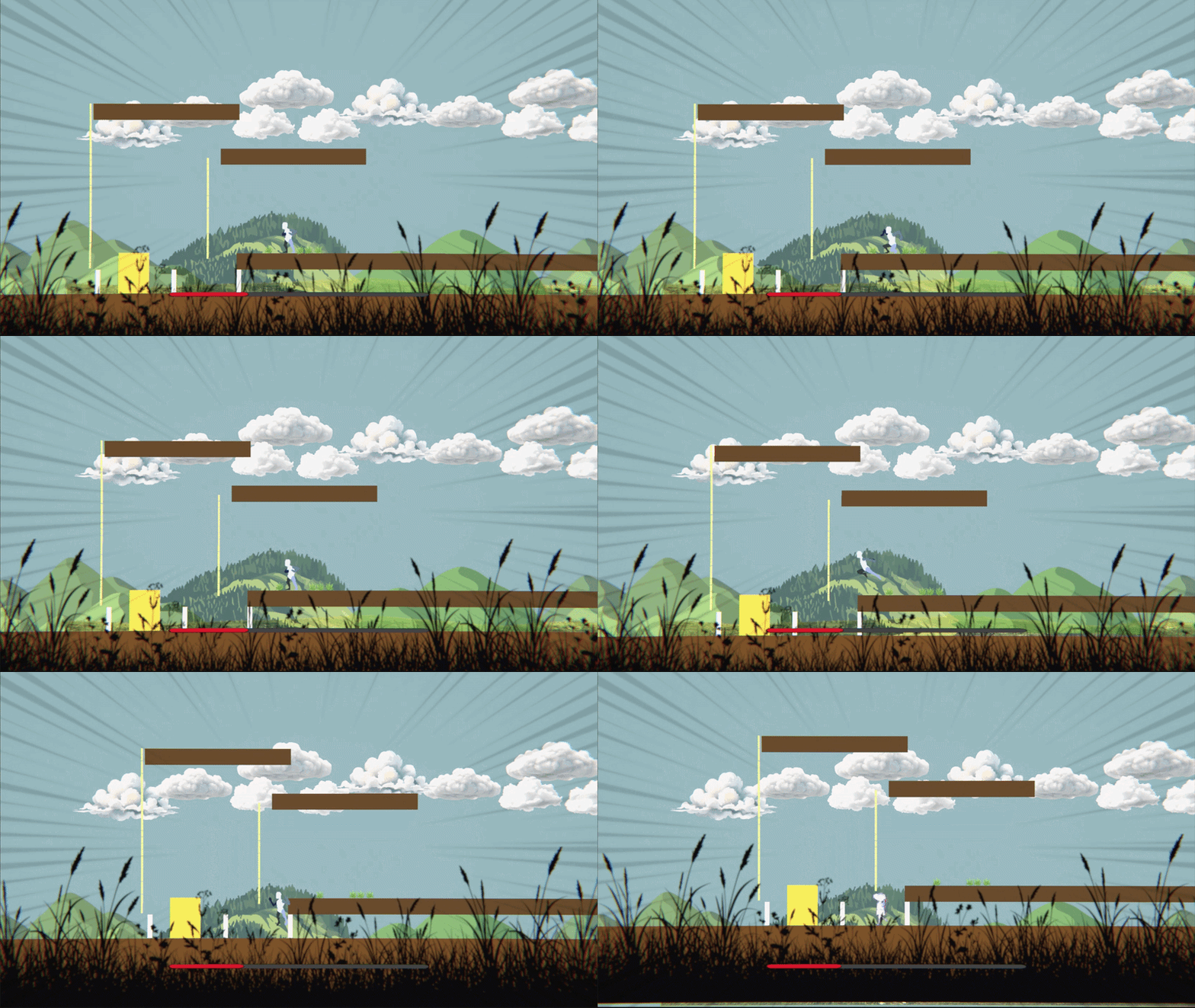
Added a dynamic stance system where players hold 'F' to loosen or tighten the screws on her leg ring to adapt to obstacles.
Note: In this iteration, pain naturally reduced when the player stopped moving or switched to the loose state.
-
Loose State: The character walks slower and accumulates pain slowly. Ledge reaching/climbing is only available in this state, though hanging too long builds pain.
-
Intent: Represents careful, cautious movement. It turns climbing into a ticking clock of physical endurance.
-
Intent: Represents careful, cautious movement. It turns climbing into a ticking clock of physical endurance.
-
Tight State: The character walks faster and more stably, and unlocks the "Lunge" ability. However, she accumulates pain rapidly, and merely entering this state forced with an immediate 25% pain penalty.
- Intent: Introduces deep "Calculated Risk." Players must decide if a burst of speed or a lunge is worth the immediate and rapid physical toll it takes on the character.

Iteration 3: Trade-Offs & Gamified Realism
Goal: Address Iteration 2 playtest feedback indicating a lack of consistency. Players felt the states needed a much tighter trade-off between player choice and traversal power. The systems were drastically redesigned to balance "gamified realism" and force deliberate state management.
-
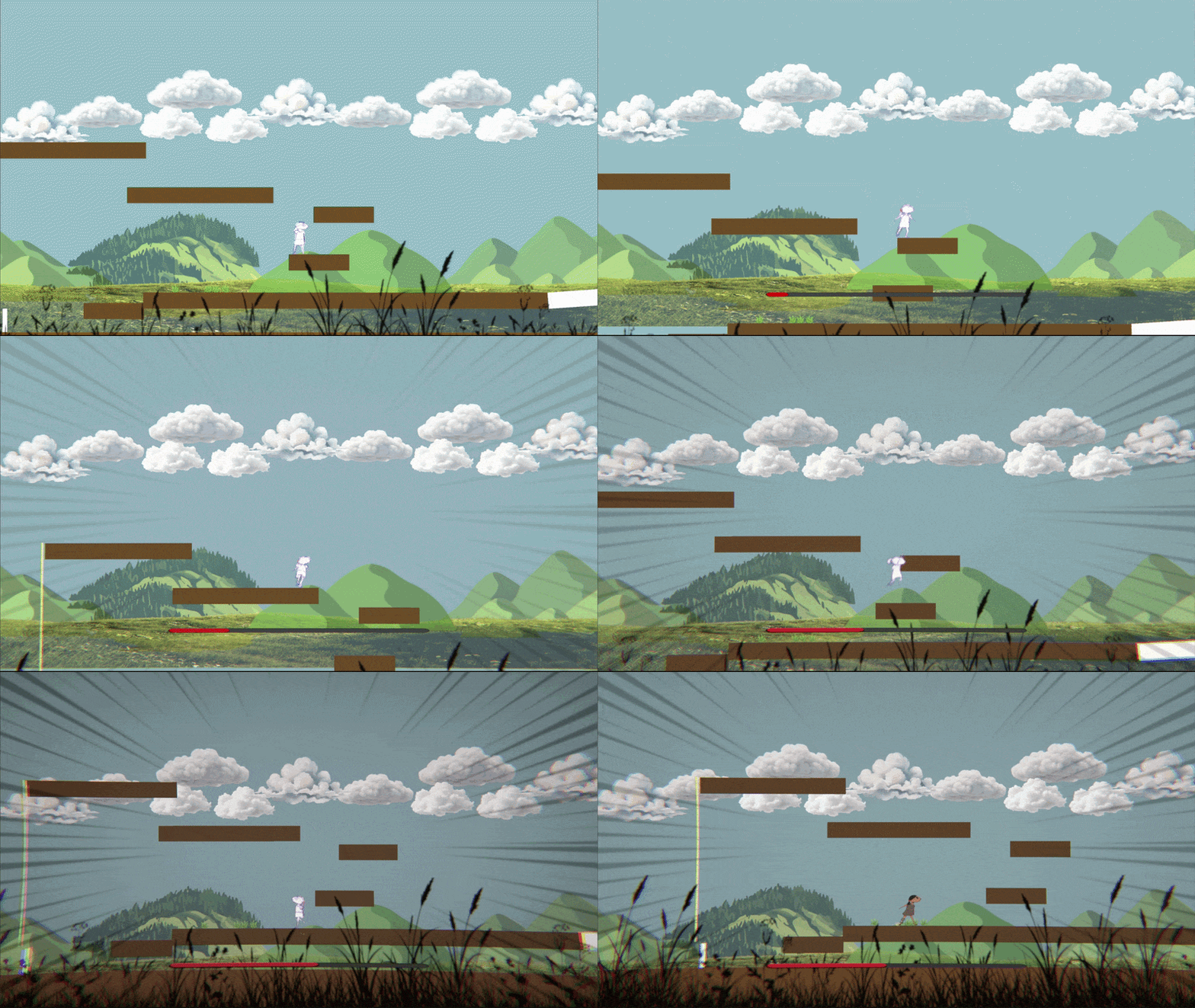
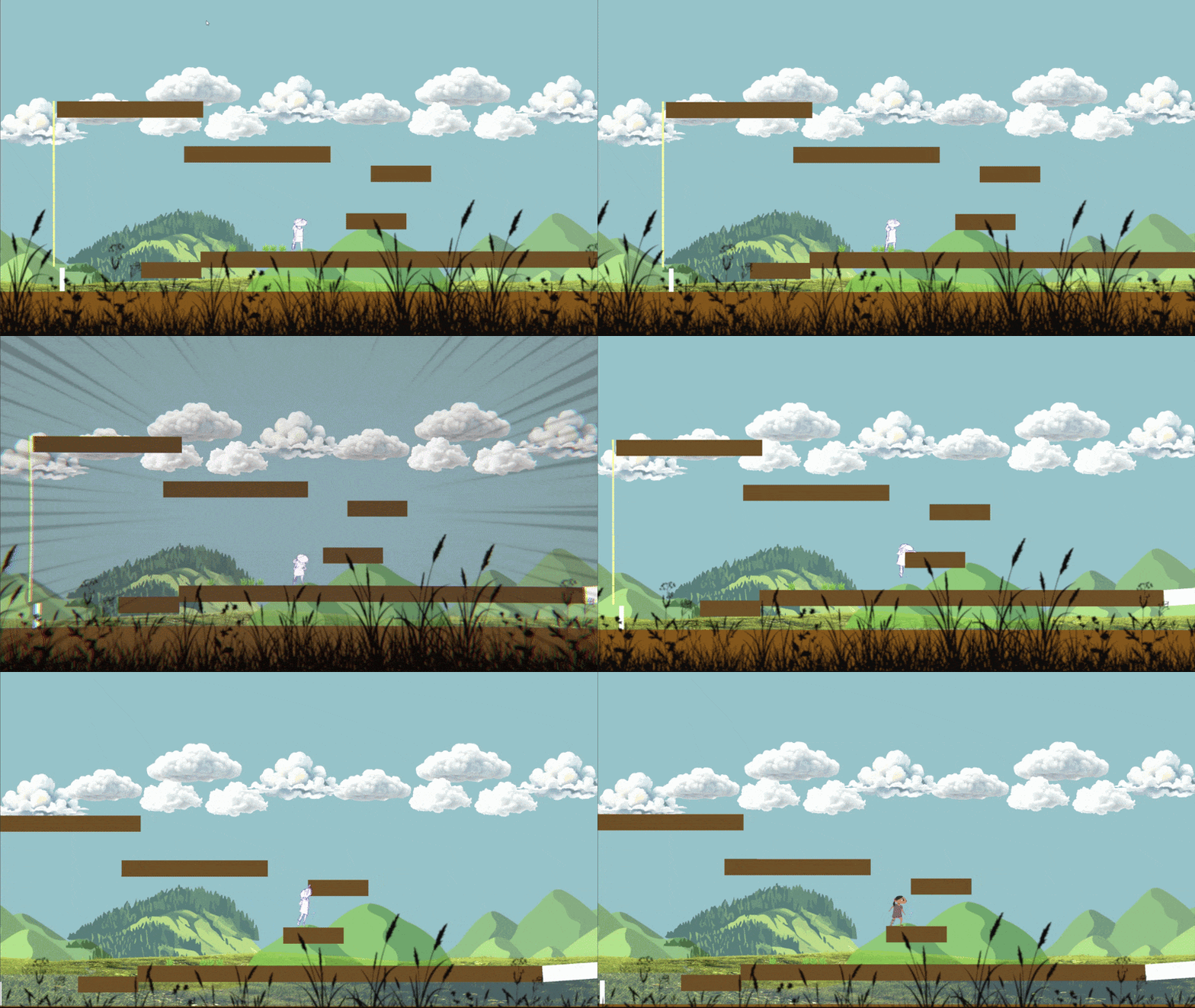
Tight State (High Power, High Consequence):
-
Mechanics:
- Fast walk and sprint enabled.
- Pain now starts from 0 (removing the instant penalty), but every action inflicts a massive chunk of pain. Crucially, pain now persists and no longer recovers simply by standing still.
- The lunge covers longer horizontal distance and prevents the "Trip Down."
- Ledge reach is extended from head height to higher than head height. -
Intent: This state makes the player capable, but the cost is permanent until actively managed. By removing auto-recovery, players can no longer just "wait out" the pain; they must commit to their movement choices.
-
Mechanics:
-
Loose State (High Safety, High Vulnerability):
-
Mechanics:
- Slow walk only.
- No pain is accumulated from actions. Instead, this state acts as the active recovery for pain built up in the Tight State.
- The lunge is significantly shorter and ends with a guaranteed "Trip Down."
- Ledge reach is severely restricted (up to head height only). - Intent: Creates a perfect mechanical separation. To recover, the player must actively choose to become slow and vulnerable. The guaranteed trip down on the lunge ensures the player cannot abuse the safety of this state for platforming.
-
Mechanics:
Iteration 4: Balancing for 'FUN' & Agency
Goal: Address late-game playtest feedback where players were becoming desensitized (or frustrated) by the guaranteed loose state trip down. Reintroduce agency to maintain emotional resonance.
-
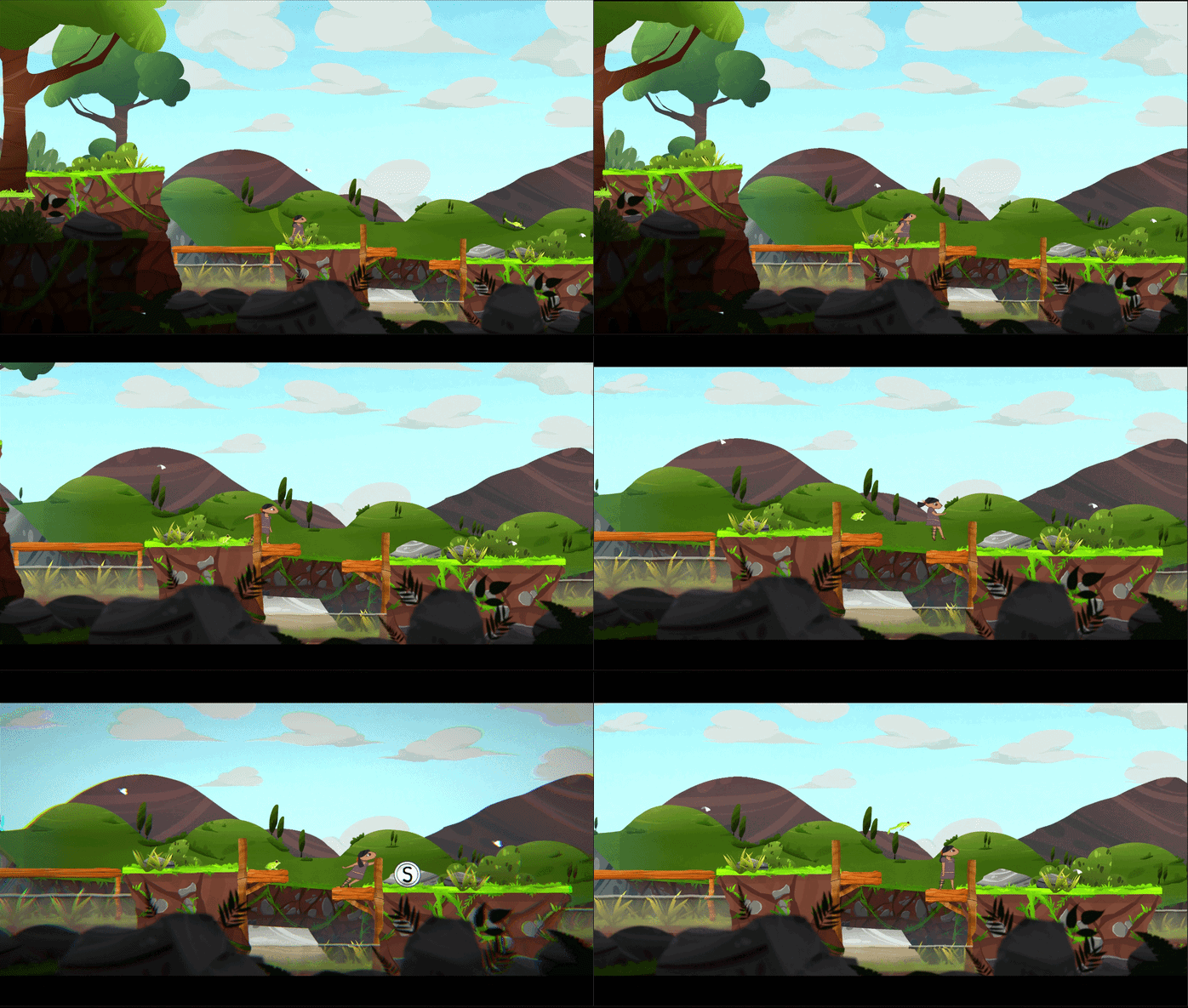
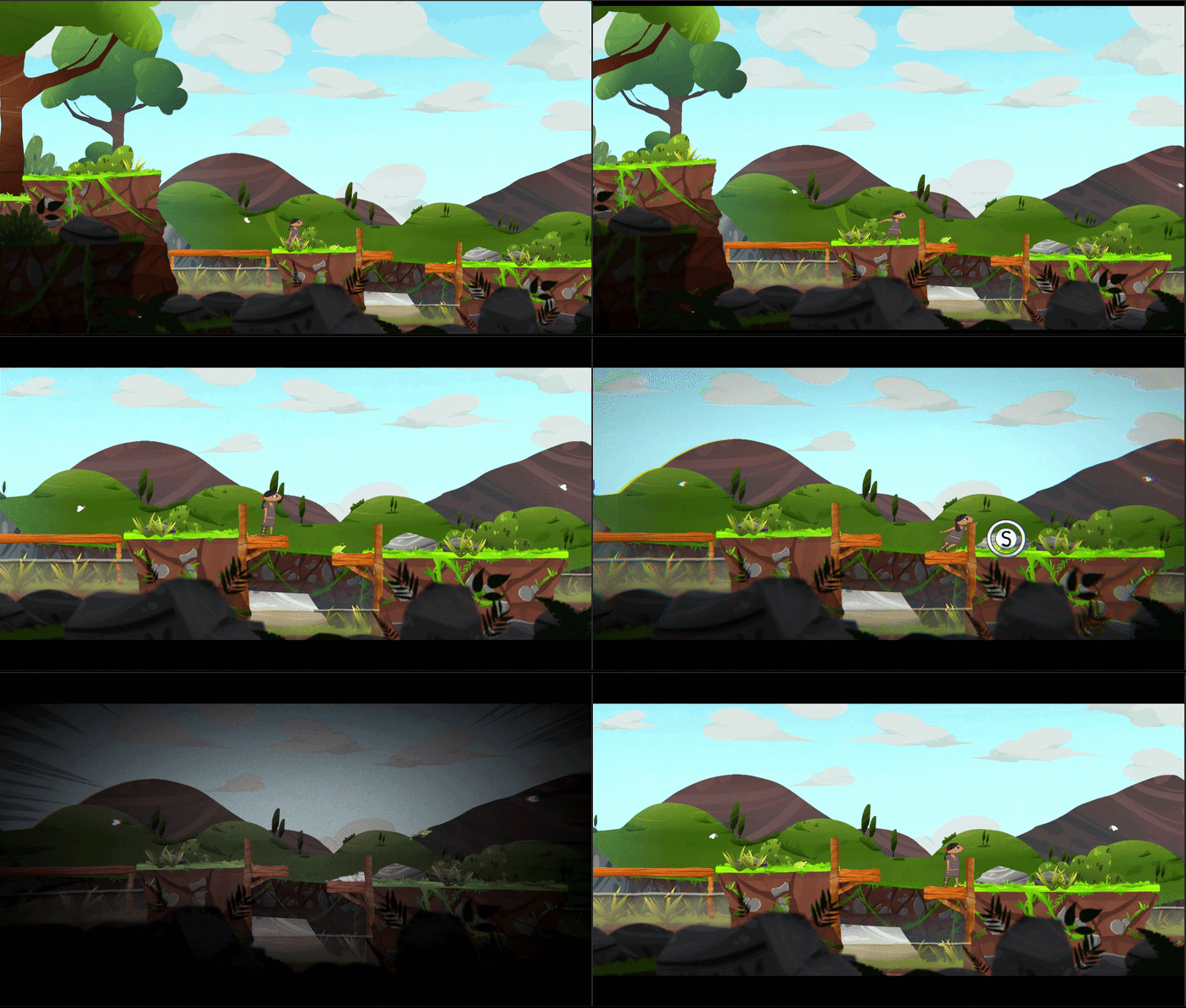
Mechanics: Removed the guaranteed "Trip Down" after a lunge in the Loose State. Replaced it with a Quick Time Event (QTE). Success means a safe landing; failure results in the Trip Down.
- Intent: Playtests revealed that as the game progressed, players became numb to the hard-coded, unavoidable tripping. It stopped evoking empathy and started causing frustration. By tying the fall to a QTE, the responsibility shifts from the system to the player. Now, when the character trips, it’s because the player failed the execution. This prevents desensitization and ensures players continue to feel the emotional weight of letting the character down.


Personal Reflection
Through rigorous iteration, 'Where the Bird Sings' evolved from a standard 2D platformer into a methodical, puzzle-adventure experience.
By systematically removing empowering mechanics and replacing them with heavily constrained, consequence-driven systems, I believe the gameplay now closely mirrors the narrative pillar of 'YOUR HUNGER MUST BE BIGGER THAN YOUR EXCUSES.'
 Next Project